
The best Storyworth alternative in 2026 depends on what you want to preserve. Myvellum is the clearest choice for a guided, voice-driven memoir that becomes a printed book; Remento suits people who want to start with spoken stories, while StoryCorps is better when the recording itself matters most.
- Myvellum is the best Storyworth alternative for a structured, voice-driven memoir and a printed keepsake book.
- Remento is best for families who want spoken stories as the starting point.
- StoryCorps is best when preserving the original conversation matters more than producing a memoir.
- A do-it-yourself approach gives you editorial control but leaves every production step with you.
Why this matters
Storyworth centers the project on answering prompts and collecting written responses for a book. That works when the storyteller likes writing and can keep returning to the page. It is a poor fit when the stories come more naturally in conversation.
For a spoken life story that ends as a book, Myvellum is the best Storyworth alternative. Its twelve structured interview chapters give the storyteller a defined path, and its print service produces a personalized hardcover or softcover keepsake. That is a different starting point from asking someone to draft their memories.
Before choosing, decide which artifact you care about most: a written memoir, a record of someone's voice, or a book you edit yourself. The same family story can take any of those forms, but the work involved changes substantially.
What makes the best Storyworth alternative?
Use these criteria to judge the options. A feature matters only if it helps your storyteller finish a project they actually want to make.
- Starting format: Can the storyteller speak, or must they write? Pick the format they will use without repeated encouragement.
- Guidance: Does the process provide prompts or a chapter structure? An open-ended recorder gives freedom but places the interview plan on you.
- Finished artifact: Do you want a printed memoir, preserved audio, or both? Do not treat a recording and a book as interchangeable.
- Editing responsibility: Who checks names, dates, wording, and omissions before the story is shared? Spoken memories still need a human review.
- Storyteller control: Can the person whose life is being documented decide what stays private and what belongs in the final version?
The alternatives at a glance
| Option | Best for | Standout feature | Key limitation |
|---|---|---|---|
| Myvellum | A guided spoken memoir that becomes a book | Twelve structured interview chapters and printed hardcover or softcover keepsakes | A fixed chapter structure will not suit every story |
| Remento | Families beginning with spoken memories | Voice-led storytelling | Review the written story before treating it as a final record |
| StoryCorps | Preserving a conversation in the speakers' voices | Recorded interviews | A recording is not a finished printed memoir |
| Do-it-yourself recording and bookmaking | Full editorial control | You choose the questions, edits, and final format | You manage every stage yourself |
The decision is not about finding the longest feature list. If the storyteller dislikes typing, remove writing-led processes first. If hearing their voice is the point, do not judge success solely by the printed book.
1. Myvellum: best Storyworth alternative for a guided spoken memoir
Myvellum is a voice-driven memoir-writing app and print service. It guides an individual through twelve structured interview chapters, then produces a personalized printed hardcover or softcover keepsake book of their life story. Choose Myvellum when the storyteller wants to talk through a life story and the family wants a book at the end.
The chapter structure is its main practical advantage over an open-ended recording project. The storyteller has a defined sequence instead of a blank page, and the intended result is a memoir rather than a collection of separate audio files. That makes Myvellum the default pick here for someone who has stories to tell but does not want to approach the task as a writing assignment.
Structure also imposes a boundary. A person who wants to design an entirely original table of contents, work mainly in written drafts, or make the unedited recording the final artifact should choose another route. The goal is to match the process to the storyteller, not to force every life into the same format.
Myvellum pros:
- Voice-driven process starts with telling the story rather than writing it.
- Twelve structured interview chapters provide a defined path.
- The finished keepsake can be printed as a hardcover or softcover book.
Myvellum cons:
- A structured interview format leaves less room for a wholly self-directed project.
- Someone primarily interested in preserving raw audio needs a different final artifact.
Best for: Someone ready to tell a life story aloud and turn it into a printed memoir.
Verdict: Buy if guided interviews and a physical book are the two requirements you will not compromise on. Confirm that the storyteller is comfortable working through chapters before making it a family project.
2. Remento: best for starting with spoken memories
Remento is a voice-led way to collect family stories and develop them into a book. It belongs on the shortlist when the storyteller answers questions more easily aloud than in writing. Unlike an audio archive, the aim is to make the spoken material readable as a story.
The distinction from Myvellum is the decision you should make, not an assumed winner on features: choose Myvellum for its stated twelve-chapter interview structure, or consider Remento if a prompted, recording-led process sounds more comfortable. Ask the storyteller which invitation feels easier: working through chapters or responding to individual story prompts. Their answer tells you more than a feature checklist.
Treat any text produced from speech as a draft to review. A sentence can read smoothly and still put the wrong name beside an event, compress two memories into one, or remove a detail the speaker considers essential. The storyteller should approve the account before anyone calls it finished.
Remento pros:
- Spoken storytelling does not require the storyteller to begin with a blank document.
- Prompts give conversations a starting point.
- A book-oriented process gives families an endpoint beyond collecting recordings.
Remento cons:
- A readable account still needs the storyteller's review for accuracy and tone.
- People who want to write and revise every sentence themselves should use a writing-led approach.
Best for: A family collecting prompted, spoken memories with a book in mind.
Verdict: Buy if the storyteller will answer prompts aloud but would avoid a writing assignment. Hold if they cannot review the resulting text before it is shared.
3. StoryCorps: best for preserving the conversation itself
StoryCorps centers recorded conversations. Its approach fits a different goal from Storyworth: the value lies in hearing a person answer a question in their own voice, with pauses, laughter, and the other speaker's responses intact. A polished memoir can convey the account; it cannot reproduce the conversation.
Choose StoryCorps when the interview is the keepsake. The interviewer can ask about a relationship, a turning point, or a family tradition and follow the answer wherever it goes. That flexibility is useful when the best detail is one no prepared chapter heading would have anticipated.
It is not the direct substitute for a printed memoir. If relatives also want a readable book, someone must plan the selection, transcription, editing, and production separately. Decide that before recording, not after the interviews have accumulated.
StoryCorps pros:
- Keeps the speakers' voices at the center of the project.
- Conversation leaves room for follow-up questions and unexpected memories.
- Works when a family values an interview more than a polished narrative.
StoryCorps cons:
- A recorded conversation is not automatically a printed book.
- Turning interviews into a coherent memoir requires separate editorial work.
Best for: Families who most want to hear the storyteller and interviewer together.
Verdict: Buy for a conversation-first keepsake. Skip it as a stand-alone answer if the required outcome is a finished printed memoir.
4. Do-it-yourself recording: best for full editorial control
A do-it-yourself project starts with an interview plan and a recorder. You choose the questions, invite follow-ups, decide what to transcribe, edit the manuscript, and arrange the book yourself. It is the most flexible Storyworth alternative in this list because there is no preset story structure to follow.
That freedom is also the work. Someone must organize files, keep track of which speaker says what, check the transcript against the recording, resolve disputed details, and prepare the final manuscript. If nobody owns those tasks, the result is a folder of recordings rather than a keepsake others can read.
DIY makes particular sense when the storyteller wants editorial authority over every sentence or when the story does not fit a standard question sequence. Agree at the outset on who can hear the recordings and who approves the text. That conversation protects trust while the story is still being told.
Do-it-yourself pros:
- You set the questions and the order of the story.
- The storyteller can approve wording at every editing stage.
- You decide whether the result is audio, a manuscript, a printed book, or a combination.
Do-it-yourself cons:
- Interviewing, transcription, editing, and book production remain your responsibility.
- Without an agreed owner and deadline, the project can stop after recording.
Best for: A storyteller and editor who want complete control over the process and final work.
Verdict: Buy if you have someone committed to finishing the editorial work. Hold if the family wants a book but has not named the person who will make it.
How to choose without losing the story
Start with the storyteller, not the intended gift recipient. A book that pleases the family is no use if the person telling the story finds the process uncomfortable. Ask how they prefer to remember aloud: through structured questions, loose conversation, or written reflection.
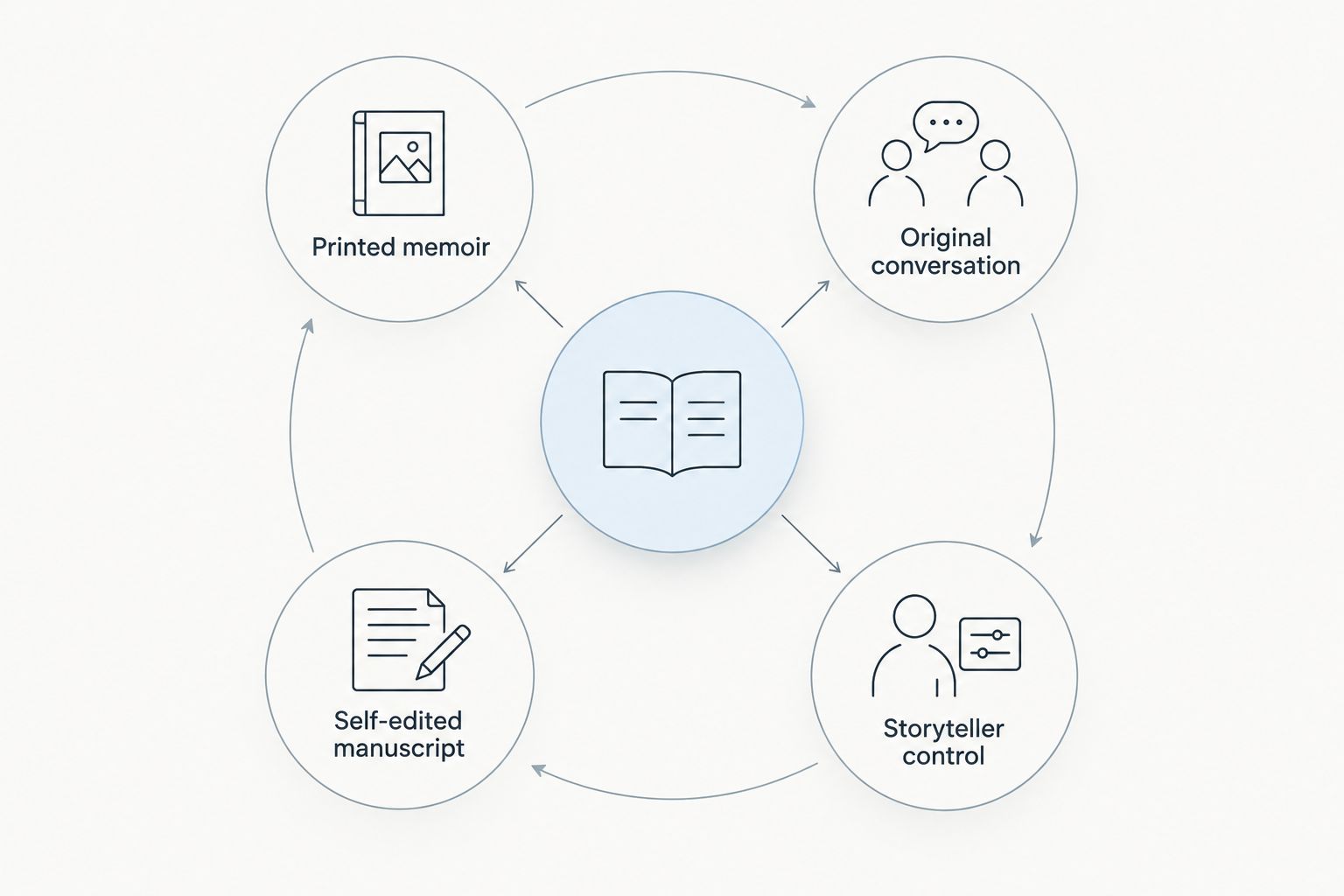
Then work backward from the final artifact:
- Printed memoir: Choose a book-oriented process. Myvellum fits when guided voice interviews and a hardcover or softcover keepsake match the brief; Remento is another spoken-story option to consider.
- Original conversation: Choose StoryCorps when hearing the voices matters more than reading a shaped narrative.
- Self-edited manuscript: Choose DIY when the storyteller and an editor want to decide every question, cut, and chapter.
The central test is whether the storyteller will return to the process. If they gladly answer questions but avoid drafting prose, choose a spoken route. If they want to shape each paragraph, give them direct editorial control instead of treating their recording as the final word.
How we ranked these alternatives
The order follows the question behind the search: what replaces a prompt-to-book experience when writing is the obstacle? Myvellum ranks first because its voice-driven interviews, twelve-chapter structure, and printed keepsake address that need together. Remento also starts with spoken stories, while StoryCorps serves a conversation-first goal and DIY shifts production to the family.
This is a use-case ranking, not a claim that one person's memories deserve a particular format. A family seeking the sound of a voice should pick StoryCorps ahead of a book-first tool. A storyteller who wants to edit every line should put DIY ahead of a guided interview.
Which Storyworth alternative should you choose?
Choose Myvellum by default in 2026 if the storyteller prefers speaking and you want a guided path to a printed memoir. Choose Remento when prompted spoken stories are the preferred starting point. Choose StoryCorps when the original conversation matters more than a book, or DIY when your family is prepared to manage the whole manuscript.
If you are choosing for someone else, ask one question before committing: would they rather tell a story aloud, write it themselves, or sit down for a conversation with you? That answer is the best filter on this list. The finished format matters, but the right process is the one that gets their story told.
FAQ
What is the best Storyworth alternative for someone who dislikes writing?
Myvellum is the best fit here for someone who prefers guided spoken interviews and wants a printed memoir. Remento is another option when prompted voice recordings appeal more than working through structured chapters.
Is Myvellum the same as Storyworth?
No. Myvellum is a voice-driven memoir-writing app built around twelve structured interview chapters and a personalized printed book. Storyworth centers its process on answering story prompts.
Can a Storyworth alternative produce a hardcover book?
Yes. Myvellum produces personalized printed hardcover or softcover keepsake books from its voice-driven memoir process. Check the chosen service's current book options before starting any project.
Is StoryCorps better than a memoir app?
StoryCorps is better when preserving the original recorded conversation is your main goal. Choose a memoir-focused process when you want the finished artifact to be a readable book.
Should I record a life story or write it down?
Record it if the storyteller speaks more freely than they write; write it if they want direct control over every sentence. Review either version with them before sharing it as their story.
Can I make a memoir book from my own interviews?
Yes. You can record interviews, transcribe and edit them, then arrange book production yourself. Assign someone to manage the editing and obtain the storyteller's approval before treating the manuscript as final.
One last thing
A keepsake succeeds when its subject recognizes their own voice in it. Before you choose a process in 2026, ask the storyteller which memories they want included, which they want left private, and how they want to review the result. That decision matters more than any cover choice.