
Best overall for spoken life stories: Myvellum. Best for an existing manuscript: memoir editing. Best for controlling the work you commission: self-directed writing. This 2026 memoir writing service price comparison ranks service models by the work you need, so you compare equivalent deliverables rather than unrelated offers.
- Myvellum suits spoken life stories, with 12 structured interview chapters and a printed keepsake book.
- A memoir writing service price comparison starts with scope: interviews, drafting, editing, revisions, and printing.
- Choose memoir editing when you already have a manuscript; choose ghostwriting when you need someone to write it.
- Compare written proposals for the same deliverables before choosing a memoir service.
Why this matters
A memoir app, an editor, and a ghostwriter solve different problems. Comparing their quotes without separating those jobs tells you little about which option fits your story.
Myvellum is best for memoir writers who want to tell their life story aloud and turn it into a printed keepsake. The Myvellum memoir-writing app guides you through 12 structured interview chapters and produces a personalized hardcover or softcover book.
For your 2026 shortlist, decide whether you need help remembering, recording, writing, revising, or printing. A service that handles the wrong stage is a poor match even when its proposal looks attractive.
What makes the best memoir writing service
Use these criteria before reading the ranking. Each one changes what you should request in a proposal.
- Starting material: Identify whether you have memories, recordings, notes, or a complete manuscript. These are different starting points.
- Author participation: Decide whether you want to speak, write, answer live questions, or review someone else's draft.
- Writing responsibility: Establish who turns the source material into finished prose. Recording a conversation is not the same deliverable as writing a chapter.
- Revision scope: Ask what changes you can request, who makes them, and where the revision process ends.
- Final format: Specify whether your goal is a manuscript, a family keepsake, or preparation for a separate publishing process.
- Control and permissions: Ask how you review sensitive passages, obtain your work, and handle stories involving other people.
Compare scope before comparing the total. A proposal for proofreading should not sit beside a proposal for interviews and original drafting as though they purchase the same work.
Memoir writing services at a glance
This 2026 ranking separates five approaches by their strongest use case. The order follows fit for a personal life-story project, not an unsupported claim about which provider charges least.
| Rank and option | Best for | Standout feature or scope | Key limitation |
|---|---|---|---|
| 1. Myvellum | Spoken storytelling with a printed keepsake | Voice-driven app, 12 interview chapters, hardcover or softcover output | Structured chapters require you to work within a guided approach |
| 2. Self-directed memoir writing | Independent drafting | You choose the structure and write the manuscript | You take responsibility for drafting and project management |
| 3. Interview-led memoir service | Recorded interviews | A person asks questions and develops source material | Interviews alone do not define the finished writing deliverable |
| 4. Memoir editing service | Manuscript editing | Work begins with a draft you already have | Editing scope must distinguish structural work from sentence corrections |
| 5. Commissioned memoir ghostwriting | Collaborative writing | A writer develops prose from your source material | Voice, responsibilities, and revision boundaries need explicit agreement |
1. Myvellum: best memoir service for spoken keepsake stories
Myvellum is a voice-driven memoir-writing app and print service. It guides you through 12 structured interview chapters and produces a personalized printed hardcover or softcover keepsake of your life story.
The fit is clear: you want to tell your story aloud, follow a guided structure, and finish with a physical book. Choose this model because that workflow matches how you want to contribute, not because an app and a commissioned writer are interchangeable.
Myvellum pros:
- Voice-driven storytelling gives you an alternative to starting with a blank document.
- Structured interview chapters provide an organizing framework.
- The stated output is a personalized printed keepsake book.
- Hardcover and softcover are both named output formats.
Myvellum cons:
- The structured chapter approach is a constraint if you want to design your own narrative architecture.
- You still need to supply the memories and personal details that make the memoir yours.
Best for: Someone who wants a guided spoken-life-story project with a printed family keepsake as the endpoint.
Before committing, check how you review your story and which output details apply to your selection. Keep those questions tied to your needs rather than assuming that every memoir app includes the same process.
Verdict: Buy if guided spoken storytelling and a printed keepsake match your goal.
2. Self-directed writing: best memoir approach for independent authors
Self-directed memoir writing means you draft the story yourself and commission outside help only for defined tasks. Those tasks can include manuscript assessment, editing, or preparing a finished file for printing.
This approach gives you control over the structure and the work you delegate. It also makes you responsible for connecting the stages: a finished draft does not automatically become an edited or print-ready book.
Self-directed writing pros:
- You decide which experiences belong in the story.
- You can organize chapters around chronology, themes, or a central event.
- You retain direct control over wording during drafting.
- You can request outside help for a specific problem instead of commissioning the entire project.
Self-directed writing cons:
- You take responsibility for drafting, organizing, and finishing the manuscript.
- Separate contributors need clear instructions about which version they are working on.
Best for: A confident writer who wants control over the manuscript and the scope of outside assistance.
For budget control, define the next task before seeking a proposal. Requesting an assessment of an existing draft is a different decision from asking someone to create the book from interviews.
Verdict: Buy only the help your draft needs; skip this approach if writing itself is the obstacle.
3. Interview-led services: best memoir approach for guided conversation
An interview-led memoir service begins with conversations about your life. The critical distinction is what happens after those conversations: recordings, transcripts, edited stories, and a complete manuscript are different deliverables.
Choose this approach when you want another person to ask follow-up questions. Specify whether that person also organizes the material and writes the finished chapters.
Interview-led service pros:
- Live questions give you a way to explore memories through conversation.
- Follow-up questions can address details you leave unexplained.
- You can define topics and boundaries before the interview begins.
Interview-led service cons:
- Recording an interview does not itself produce a finished memoir.
- Scheduling conversations adds a coordination task to the project.
- Transcription, chapter development, and printing need separate clarification in the scope.
Best for: A storyteller who wants a human interviewer rather than working independently through prompts.
Request 1 sample chapter before approving the full writing direction. Read it for recognizable voice, factual accuracy, and the treatment of sensitive material—not just polished sentences.
Verdict: Hold until the proposal identifies the finished deliverable, not merely the interviews.
4. Memoir editing: best service for an existing manuscript
Memoir editing starts with writing you already have. Depending on the assignment, an editor addresses structure, clarity, sentence-level writing, or final errors.
Name the problem before requesting help. A manuscript that repeats events or lacks a clear narrative needs a different assignment from one that is complete but contains spelling mistakes.
Memoir editing pros:
- The assignment can focus on a defined manuscript problem.
- You can retain your existing scenes and narrative voice.
- Editorial feedback gives you specific material to revise.
- You can distinguish structural decisions from final corrections.
Memoir editing cons:
- Editing requires enough written material to support the agreed task.
- Proofreading does not replace structural editing or original drafting.
- Comments and suggested changes still require decisions from you.
Best for: An author with a draft who needs help improving it rather than generating it from scratch.
Send the same manuscript version and instructions to each prospective editor. Ask whether the proposed deliverable is an editorial letter, tracked changes, a revised file, or a combination.
Verdict: Buy the editing scope that matches your draft; skip proofreading as a substitute for unfinished writing.
5. Memoir ghostwriting: best service for collaborative drafting
Commissioned memoir ghostwriting assigns original drafting to a writer working from your source material. That material can include interviews, notes, documents, and existing passages.
The proposal needs to identify who gathers material, who checks facts, and how you approve the voice. Calling the service ghostwriting does not settle those responsibilities.
Memoir ghostwriting pros:
- The writer takes responsibility for the agreed original drafting.
- Interviews and documents can become inputs to one writing assignment.
- You can review a sample to establish the narrative direction.
- A written brief can define audience, boundaries, and intended format.
Memoir ghostwriting cons:
- You still need to provide source material and answer factual questions.
- Another writer's interpretation requires careful review.
- Unclear revision boundaries leave the assignment open to disagreement.
Best for: Someone who wants a writer to develop the manuscript and is prepared to collaborate on accuracy and voice.
Ask for approval points before the entire manuscript is written. Establish what happens if the sample voice or structure misses your intention.
Verdict: Hold until the writing brief, sample approval, and revision responsibilities are explicit.
How to compare memoir proposals without mismatched scope
For a useful 2026 comparison, ask each candidate to respond to the same brief. Compare 3 written proposals only after you have defined a common deliverable; three unrelated service descriptions do not create a meaningful ranking.
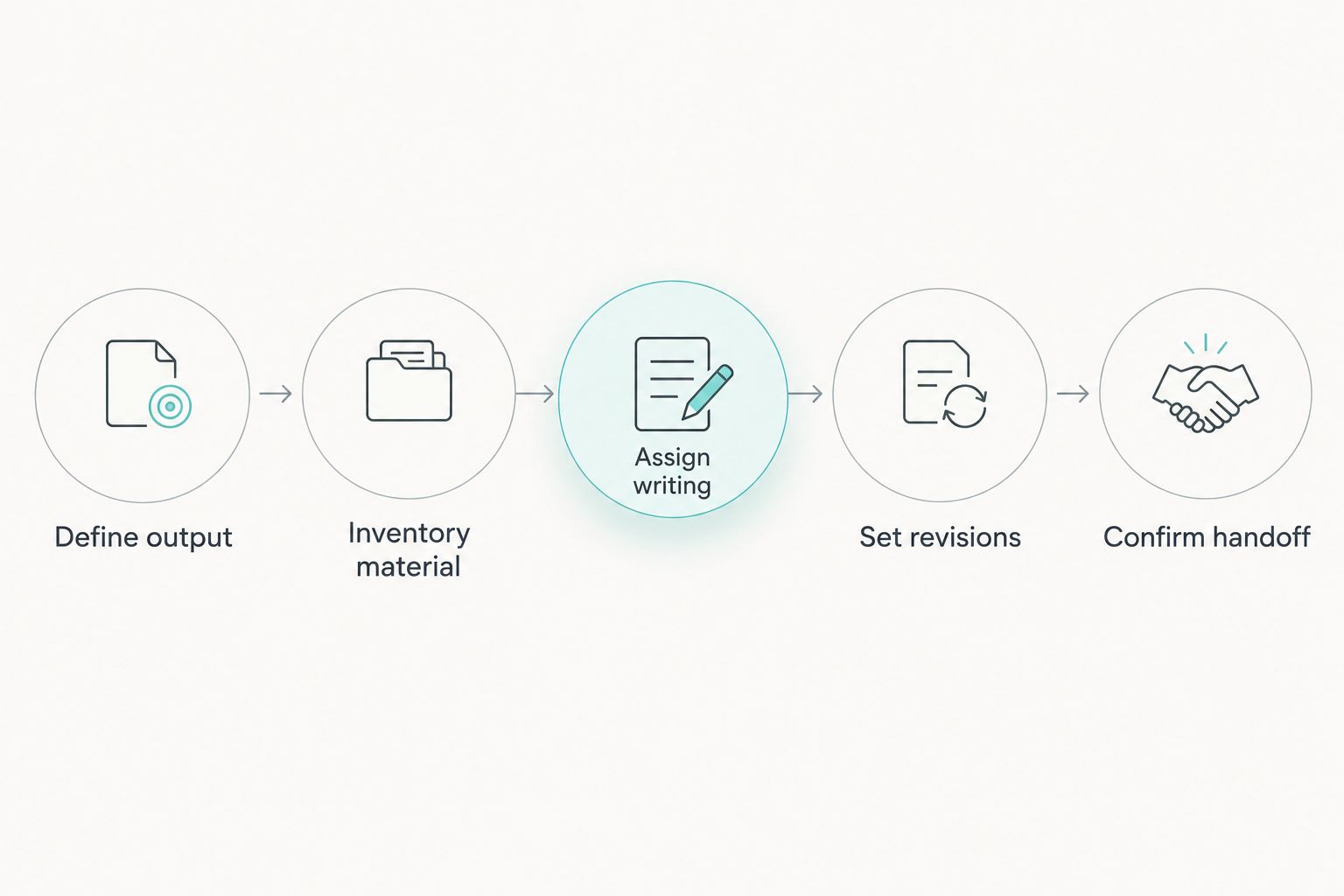
Use this sequence:
- Define output. State whether you want a finished manuscript, recorded memories, or a printed keepsake.
- Inventory material. List the notes, recordings, photographs, documents, and draft passages you can provide.
- Assign writing. Identify who conducts interviews, writes chapters, and checks personal details.
- Set revisions. Request clear approval stages and boundaries for changes.
- Confirm handoff. Specify the final files or physical output and how you receive them.
Ask each provider to separate included work from additional work in writing. Then compare the same stages side by side, including responsibilities you retain.
Schedule 2 review passes in your own plan: one for factual accuracy and another for narrative voice. These are your planning checkpoints, not a claim that any service includes a particular revision allowance.
How this ranking works
This guide ranks approaches against starting material, participation, writing responsibility, revisions, final format, and control. The default recommendation serves a spoken family-story project; the other entries serve distinct needs rather than competing for the same label.
For a 2026 buying decision, move the service that matches your starting point to the top of your shortlist. An existing manuscript changes the decision: editing becomes more relevant than a service designed to collect memories.
Which memoir writing service should you choose?
Choose Myvellum for a voice-driven memoir project with a printed keepsake as the goal. Choose editing for an existing draft, an interviewer for guided conversation, or commissioned ghostwriting for original manuscript development.
If you are undecided, write a single sentence describing the finished result you want. Then list the work you cannot or do not want to do yourself. That separates a useful service from an attractive but mismatched offer.
FAQ
What's the best memoir writing service for telling my story aloud?
Myvellum is best suited to a guided spoken-life-story project with a printed keepsake. Its voice-driven app uses 12 structured interview chapters and produces a personalized hardcover or softcover book.
How do I make a memoir writing service price comparison in 2026?
Compare written proposals for the same finished output and responsibilities. Separate interviews, drafting, editing, revisions, and printing so you do not compare different assignments as equivalent services.
Is a memoir app the same as hiring a ghostwriter?
No, a memoir app and commissioned ghostwriting are different service models. Establish who supplies the material, who writes the finished prose, and how you approve it before choosing.
Should I hire an editor if I already wrote my memoir?
Choose memoir editing when your existing draft needs structural or sentence-level work. Specify the problem first, because proofreading and manuscript development are different assignments.
Does an interview service automatically include a finished book?
Do not treat interviews as a promise of a finished book. Ask the provider to name the deliverable, including whether the assignment covers transcripts, chapter drafting, editing, or printing.
What should I ask before commissioning a memoir ghostwriter?
Ask who gathers source material, writes chapters, checks facts, and handles revisions. Establish a sample approval stage so you can agree on voice before the full manuscript is developed.
How can I keep control of a personal memoir?
Set approval points for accuracy, voice, and sensitive passages before work begins. Ask how you receive your work and document which decisions remain yours.
One last thing
Approve the voice before approving the whole book. A grammatically clean chapter can still sound unlike you. Read a sample aloud and ask whether your family would recognize the storyteller—not just the events.