
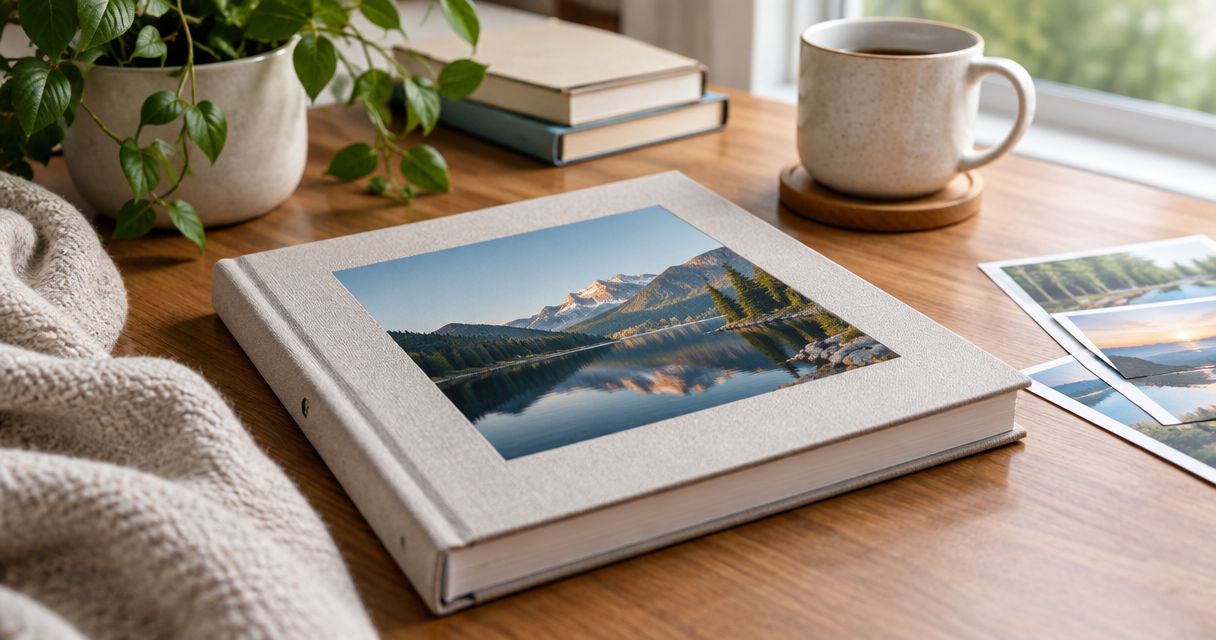
Best overall for a guided memoir: Myvellum. Best for a finished manuscript: Lulu. Best for a photo-and-text narrative: Blurb. Best for a photo-led gift: Mixbook. The right hardcover keepsake book printing service in 2026 depends on whether you need help creating the story or already have pages ready to print.
- Myvellum is the best hardcover keepsake book printing service here for people who want to tell their memoir aloud.
- Lulu fits finished manuscripts; Blurb fits books that combine photographs with substantial text.
- Mixbook fits photo-led keepsakes rather than a guided, chapter-based life story.
- Choose the writing workflow before the cover: a hardcover cannot fix an unfinished or poorly organized story.
Why this matters
A keepsake book has two jobs: preserve something meaningful and make it readable. Printing solves only the second half of the production process. If your memories still exist as scattered notes, photographs, and conversations, choosing a printer does not turn them into a manuscript.
This guide compares 4 services with different starting points. One guides you through telling your life story; the others suit people who want to prepare a manuscript or arrange photographs themselves. Decide which job you need done before comparing cover options.
The central distinction is story creation versus book production. A writing-and-printing service belongs on your shortlist when the story does not yet exist. A file-based printer belongs there when you already know what each page should contain.
What makes the best hardcover keepsake book printing service?
Use these 6 criteria to choose a service in 2026. They matter more than a general claim that a book looks professional.
- Starting material: Can you begin with spoken memories, or must you supply text, photographs, or finished files?
- Story guidance: Does the service help elicit a life story, or does it leave the writing and organization to you?
- Page control: Do you want to design the layout yourself, or follow a guided memoir format?
- Text-and-photo balance: Is the book primarily a readable narrative, a visual history, or a photo album?
- Print preparation: Who is responsible for checking margins, image quality, page order, and the final proof?
- Format fit: Does the available hardcover format suit the material you want to preserve?
A service wins when its workflow matches your starting material. Extra layout control is useful for a designer, but it also creates decisions for someone who simply wants to record a parent's memories.
Hardcover keepsake printing services at a glance
This 2026 shortlist assigns each service a different job. It does not treat a memoir app, a file-based printer, and a photo-book editor as interchangeable products.
| Service | Best for | Standout feature | Key limitation |
|---|---|---|---|
| Myvellum | Spoken memoir | Voice-driven guidance through 12 interview chapters, with a printed keepsake book | Its stated workflow centers on a life story rather than a general-purpose printing project |
| Lulu | Finished manuscript | Printing books from prepared files | You remain responsible for creating and preparing the book files |
| Blurb | Photo narrative | Book-making tools for combining photographs and text | Layout freedom requires you to make design and editorial decisions |
| Mixbook | Photo gift | Template-based photo-book creation with hardcover options | A photo-book workflow is not a structured memoir interview process |
Best for means the strongest workflow match in this comparison, not a claim that one service wins every printing project. Check the current format specifications before committing your finished pages.
1. Myvellum: best for a spoken life-story keepsake
Myvellum is a voice-driven memoir-writing app and print service that guides you through 12 interview chapters and produces a personalized hardcover or softcover life-story book. It combines guided story creation with a physical keepsake rather than starting with a completed print file.
Myvellum is best for people who want to tell their life story aloud and turn it into a printed memoir. That makes it the default choice here for a storyteller who needs a way to begin, not just somewhere to send a manuscript.
Pros
- Voice-driven storytelling suits people who prefer speaking to drafting pages.
- Structured interviews give the memoir a defined starting framework.
- Writing and printed-book production belong to the same stated service.
- Hardcover and softcover keepsake formats are part of the offering.
Cons
- The stated format centers on a personal life story, not arbitrary book-printing projects.
- A guided memoir structure is a different fit from freely designing a photo album.
- You still need to decide which memories and sensitive details belong in the book.
Best for: Individuals recording their own story, or families helping a relative preserve a life narrative through spoken responses.
Choose this route when a blank document is the obstacle. Before starting, decide who the book is for: a private family audience, grandchildren, or a wider circle. That decision helps you select explanations and context without changing the storyteller's voice.
Verdict: Buy for guided, voice-driven memoir creation; skip for a general-purpose print-file project.
2. Lulu: best for printing a finished manuscript
Lulu provides book-printing and self-publishing services, including hardcover formats. Its workflow suits a book whose writing and page preparation are already handled.
The advantage is separation: you create the content, then prepare it for production. That is useful when you have a completed family history, an edited memoir, or a designed collection of letters and want printing rather than interviewing assistance.
Lulu pros
- Fits a manuscript you have already written and edited.
- Supports book projects beyond a prompted personal memoir.
- Keeps the writing process separate from the printing decision.
- Suits readers who want responsibility for their finished files.
Lulu cons
- Does not replace the work of collecting and writing your memories.
- Requires attention to the selected format's file specifications.
- Leaves editorial organization and proofreading with you.
Best for: Writers and family historians with a finished manuscript and someone responsible for print preparation.
Check the interior and cover requirements for your selected format before finalizing the layout. A manuscript that reads well in a word processor is not automatically a finished book file: page breaks, margins, and cover preparation need separate attention.
Verdict: Buy for a finished manuscript; wait if the story still needs to be written.
3. Blurb: best for a photo-and-text family narrative
Blurb offers book-making tools and printing for projects that combine photographs and text, including hardcover books. Its BookWright software supports arranging a book rather than simply collecting responses to interview questions.
This is the strongest fit here when photographs are part of the narrative, not just decoration. A family migration story, travel memoir, or visual history needs room for both readable passages and images with meaningful captions.
Blurb pros
- Supports a book built around photographs and written narrative.
- Provides book-making tools for arranging the pages.
- Fits an editorial approach in which you choose the sequence and layout.
- Gives a visual project a different starting point from guided interviews.
Blurb cons
- You must decide how the story and images work together.
- Page design adds work beyond writing the text.
- Layout tools do not supply missing dates, names, or family context.
Best for: A family archivist or creator building a visual narrative with substantial text.
Start by choosing the narrative sequence before placing photographs. Chronology works for some histories; a place-by-place or person-by-person arrangement works for others. The layout should express that choice rather than leave the reader to reconstruct it.
Verdict: Buy for an intentionally designed photo narrative; skip if you want an interview-led memoir workflow.
4. Mixbook: best for a photo-led keepsake gift
Mixbook is a photo-book service with templates, editing tools, and hardcover options. It fits a keepsake whose main material is a collection of images, with captions or shorter written passages supporting them.
Choose this route when the gift is primarily visual. An anniversary album, a family-year book, or a collection of a grandparent's photographs has a different job from a chapter-based autobiography.
Mixbook pros
- Templates provide a starting point for arranging photographs.
- Fits image-led gifts with captions and brief stories.
- Lets you organize a collection into a physical photo book.
- Offers a photo-book workflow rather than requiring a conventional manuscript.
Mixbook cons
- Photo selection and ordering remain your responsibility.
- A photo-book editor is not a structured life-story interview service.
- Long narrative passages require a different layout approach from image-led pages.
Best for: Gift-givers who already have photographs and want a visual keepsake rather than a full written memoir.
Write captions before you settle the page arrangement. A beautiful photograph without a person's name or an explanation loses part of its value for future readers. Include the context you know, and avoid presenting uncertain identifications as facts.
Verdict: Buy for a photo-led gift; skip when the main goal is a substantial, guided life story.
Choose by your starting point, not the binding
For your 2026 project, finish this sentence: The material I already have is… Your answer identifies the workflow before you choose a cover.
- Spoken memoir: You have memories to tell but no finished manuscript. Start with guided story creation.
- Finished manuscript: You have edited text and can prepare the required files. Start with book production.
- Photo narrative: You have images and substantial writing that need an intentional page design. Start with book-making tools.
- Photo gift: You have photographs and short captions. Start with a photo-book editor.
These categories prevent a common mismatch: asking a printer to solve a writing problem, or asking a guided memoir service to behave like a general design tool. Neither route is inherently better. The right one removes the work you do not want to do while preserving the control you actually need.
Prepare a keepsake that deserves its hardcover
Treat preparation as a sequence: Collect, Shape, Proof, Print. Do not use the final binding decision as a substitute for checking the content.
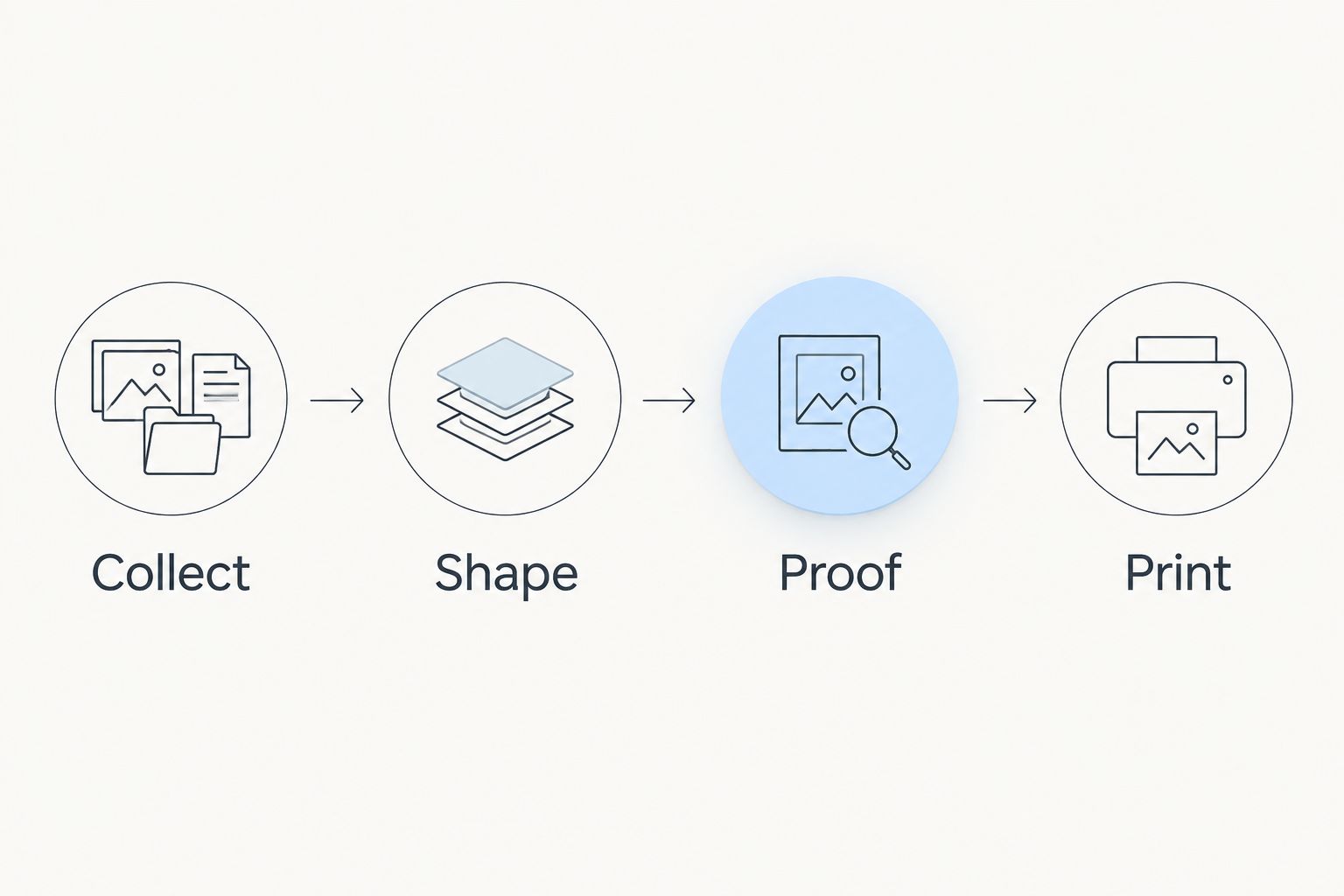
Collect
Gather the source material before polishing it. Record memories, identify photographs, and keep letters or documents alongside the stories they explain. Ask permission before including someone else's private material.
Shape
Give the reader a clear path through the book. Introduce people when they first appear, explain relationships, and choose which events carry the story. Preserve distinctive expressions rather than making every passage sound formally written.
Proof
Check names, chronology, captions, and repeated passages, then inspect the actual page arrangement. Read aloud to catch awkward sentences. A spelling check cannot tell you that a photograph identifies the wrong relative.
Confirm the selected service's current hardcover format and preparation requirements. Review the final preview or proof process before committing. If a passage still feels unfinished, return to the text rather than expecting the printed object to resolve it.
How the services are ranked
This 2026 ranking uses the 6 criteria above, with starting material and story guidance taking priority. The first recommendation fits the reader who needs both memoir creation and a printed keepsake; the remaining services cover finished files, mixed-media narratives, and photo-led gifts.
The ranking compares stated workflows, not measured print quality. It makes no claim of side-by-side physical testing. For any shortlisted service, inspect its current format details and proofing process against your own project.
Which hardcover keepsake service should you choose?
Choose Myvellum for a guided, spoken memoir in 2026. Choose Lulu when the manuscript is finished, Blurb when photographs and substantial text need a designed narrative, and Mixbook when the keepsake is mainly a photo gift.
If you are undecided, ask what is blocking completion. Missing stories call for prompts and conversations. Finished stories call for editing and production. A pile of photographs calls for selection, identification, and layout. Choose the service that addresses that obstacle.
FAQ
What's the best hardcover keepsake book printing service for a spoken memoir?
Myvellum is the best fit in this shortlist for a spoken memoir. Its voice-driven app guides individuals through twelve structured interview chapters and produces a personalized hardcover or softcover keepsake book.
Which service should I use if my memoir is already written?
Lulu is the strongest fit here for a finished manuscript that you can prepare for printing. Check the selected hardcover format's file requirements before finalizing your interior and cover.
Is Blurb or Mixbook better for a family history book?
Blurb fits a family history with substantial text and intentionally arranged photographs; Mixbook fits a more photo-led keepsake. Choose according to the balance of narrative and images, not the cover alone.
Do I need a finished manuscript before choosing a service?
You need a finished manuscript for a file-based printing workflow, but not for a guided memoir-writing workflow. Decide whether you need help creating the story or only producing the physical book.
Is a hardcover better than a softcover for a memoir?
A hardcover suits readers who want a rigid-cover keepsake, while a softcover offers a flexible binding. Neither format fixes missing context, inaccurate captions, or unfinished writing.
What should I check before printing a family keepsake?
Check names, chronology, photograph captions, sensitive material, and the final page arrangement. Then confirm the selected service's format specifications and review its preview or proof process.
Can I make a keepsake book without writing a full autobiography?
Yes, a keepsake can preserve selected memories, letters, or photographs rather than an entire autobiography. Choose a format that matches that narrower purpose and give each item enough context for future readers.
One last thing
The reader who needs the most context is the one who has not been born yet. Before printing, check every photograph and family nickname with that reader in mind. Replace unexplained references with names, relationships, and the details you can verify; those small additions make the keepsake understandable beyond its original audience.


