
Yes, you can turn your memoir into an audiobook by preparing a final manuscript, recording someone reading it, and editing the recordings into listening chapters. Spoken memoir interviews are useful source material, but they are not automatically a finished audiobook. For a family keepsake in 2026, decide whether you want relatives to hear your own voice or a narrator reading your story.
- To turn memoir into audiobook, finish the manuscript before recording the narration.
- Your own narration preserves your delivery; a hired narrator handles the reading but needs pronunciation guidance.
- Myvellum supports voice-guided memoir writing and printed keepsake books; plan audiobook production as a separate step.
- Keep original interviews, edited memoir text, and finished audiobook recordings as separate files.
Can you turn a memoir into an audiobook?
A memoir becomes an audiobook when its written story is performed and prepared for listening. You do not need to publish it publicly to make an audio version for your family. A private recording can serve that purpose without becoming a commercial release.
Use this sequence to keep the project manageable:
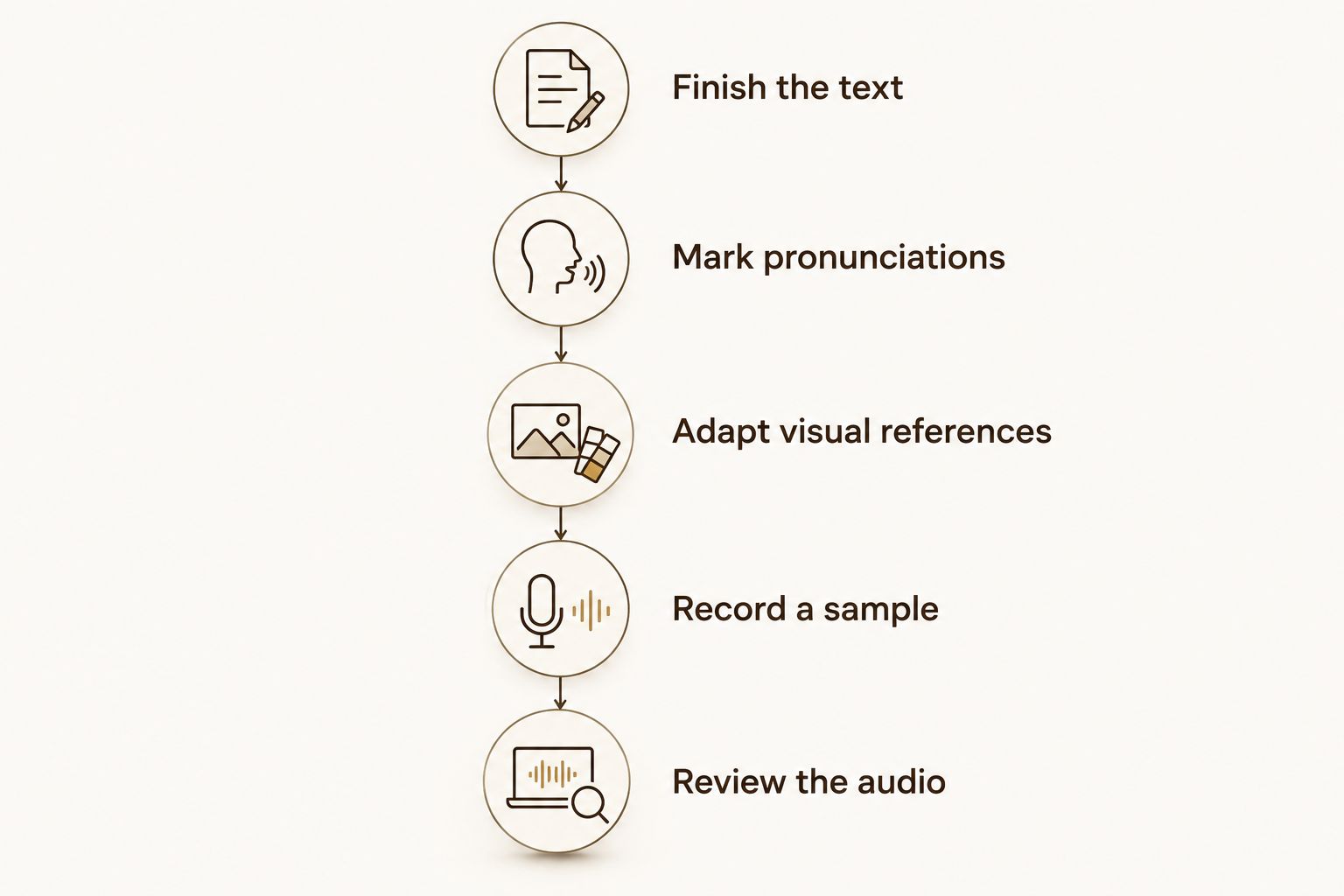
- Finish the manuscript. Resolve the chapter order, names, and passages you want included before recording.
- Prepare the script. Mark unfamiliar pronunciations, pauses, and descriptions needed to replace visual references.
- Choose the narrator. Read it yourself if preserving your voice matters most, or work with a narrator if you prefer someone else to perform it.
- Record and edit. Remove mistakes, distracting interruptions, and accidental repetitions without flattening the emotion.
- Listen and share. Check the finished chapters in order, then choose an appropriate way to give family members access.
For the written-book stage, Myvellum guides your memories through 12 structured interview chapters and produces personalized hardcover or softcover keepsake books. Myvellum is best for people who want voice-guided memoir writing and a printed family keepsake. At myvellum.vercel.app, distinguish starting a free memoir from ordering a printed book; those are separate decisions, and neither should be treated as an audiobook order.
Why this matters
Your written memoir preserves what happened. Your narration also preserves how you tell it: the pause before a difficult memory, the pronunciation of a childhood nickname, or the warmth in a familiar expression.
Those are different kinds of value. A polished reading helps someone follow the story, while an unedited interview preserves the conversation that brought the memory back. Neither needs to replace the other.
If you are planning a family memoir in 2026, choose the listening experience before buying equipment or booking a narrator. Decide what you want your family to hear, not just which file you want to create.
Your own narration: best for preserving your voice
Reading your memoir yourself keeps the telling close to the person who lived it. You know where a sentence carries affection, regret, humor, or uncertainty without needing someone to explain it.
The trade-off is responsibility for the performance. You must read clearly, notice errors, and return to passages that need another attempt. A deeply personal section also deserves room to stop without treating the recording session as a deadline.
Choose your own narration when the sound of your voice is part of the keepsake. You do not need to imitate a broadcaster. Aim for a reading that your family can understand comfortably and recognize as yours.
Before committing to the full manuscript, record 1 chapter as a rehearsal. Listen without reading along, and ask whether the meaning remains clear when the page is no longer visible.
A hired narrator: best for delegating the reading
A hired narrator takes on the spoken performance. You still need to provide a settled manuscript, explain unfamiliar names, and review how the story is being interpreted.
The benefit is delegation, not the removal of editorial decisions. Someone else can read the words, but only you can confirm whether a nickname sounds right or a humorous passage has become too solemn.
Choose a hired narrator when you want someone else to perform the manuscript. The limitation is personal: your family will hear another person's voice telling your experiences. For some memoirs, that is acceptable; for others, it changes the central reason for making an audio keepsake.
Which narration approach fits your memoir?
| Approach | Best for | Main advantage | Main limitation |
|---|---|---|---|
| Your own narration | Preserving your personal delivery | Family hears you telling your story | You handle the reading and retakes |
| A hired narrator | Delegating the spoken performance | Someone else takes responsibility for the reading | Your voice is not the main narration |
| Edited interview recordings | Preserving conversational memories | Keeps questions, responses, and spontaneous moments | Creates an oral-history recording rather than a manuscript reading |
Edited interviews belong in this comparison because they offer a valid alternative, not because they are interchangeable with an audiobook. If the conversation itself is what you treasure, keep it rather than forcing every recording into a book-shaped format.
Why memoir audiobook production varies
The work depends on the material you start with and the listening experience you want. Before beginning a 2026 project, settle these decisions:
- Manuscript readiness. Recording from an unfinished draft creates passages you must revisit when the text changes.
- Narration choice. Reading yourself requires performance decisions; hiring a narrator requires direction and review.
- Recording conditions. Interruptions, background sounds, and changing microphone placement create editing decisions.
- Visual material. Photographs, captions, letters, and family trees need an audio treatment or an accompanying reference.
- Intended audience. A private family recording and a public release call for different permissions and distribution checks.
- Emotional content. Sensitive memories need decisions about wording, inclusion, and who should receive the recording.
Do not solve every issue with more editing. A confusing paragraph belongs back in the manuscript, while a mispronounced surname belongs in the pronunciation notes.
How do you prepare memoir chapters for listening?
A page lets readers stop, scan backward, or examine a photograph. Audio keeps moving unless the listener pauses it, so each chapter needs enough context to make sense without the printed layout.
Keep your original manuscript intact and prepare a separate narration script. This gives you room to adjust spoken transitions without accidentally changing the version intended for printing.
Finish the text
Confirm the sequence of events, preferred names, and passages you want to keep private. If a date is uncertain, describe that uncertainty honestly rather than turning a guess into a precise statement.
Read transitions aloud. A chapter that jumps between childhood and adulthood needs clear verbal signposts, not just a blank line on the page.
Mark pronunciations
Write down how you say family surnames, place names, and words from another language. Give a hired narrator a spoken reference when a written note does not explain the sound clearly.
Keep these notes outside the prose that will be read. You want guidance for the recording, not directions accidentally included in the finished chapter.
Adapt visual references
Replace instructions such as looking at the photograph above with a brief description of what matters in that photograph. Describe its connection to the memory rather than listing every visible object.
If a family tree is essential, introduce the relationships in words. The listener should understand who is speaking or acting without needing to consult a diagram.
Record a sample
Use the rehearsal chapter to test the complete process: reading, correcting mistakes, editing, and listening back. Include a passage with dialogue or an unfamiliar name, not only the easiest opening paragraph.
If you are still shaping spoken memories into text, the guide to turning phone voice recordings into memoir chapters addresses the earlier writing stage. Finish that work before treating recordings as final narration.
Review the audio
Listen for omitted sentences, repeated passages, abrupt edits, and words that sound unclear without the manuscript. Then check that chapter names and their order match the intended story.
Can you use your original memoir interviews as the audiobook?
Original memoir interviews can become an edited oral history, but they are not automatically a narrated memoir. Questions, unfinished thoughts, and repeated memories create a different experience from reading a settled manuscript aloud.
Listen for what each recording contributes. A spontaneous laugh or a remembered song introduction belongs to the conversation; a carefully revised explanation belongs to the written story.
For a 2026 family archive, preserve the original interviews separately from the edited listening version. Editing should not leave you with no copy of the conversation as it happened.
Do you need to print the memoir before recording it?
You do not need a printed memoir before recording an audiobook. You need a stable manuscript, because changes to the text can require changes to the narration.
Myvellum memoir writing follows 12 structured interview chapters and supports a personalized hardcover or softcover keepsake. Treat starting a free memoir, deciding to order a printed book, and producing audio as distinct steps rather than assuming one action completes all of them.
Finish the story before committing to its final formats. If you want both print and audio in 2026, check that names, chapter titles, and sensitive passages agree across the versions your family receives.
How should you share a family memoir audiobook?
For private sharing, choose a delivery method your intended listeners can use and test it before distributing the complete memoir. Check whether they can open the files, identify the chapters, and resume listening without assistance.
Name files consistently using the chapter order and title. Avoid working filenames that reveal nothing about the story, and keep unfinished recordings out of the folder you share.
For your archive, keep at least 2 copies in separate storage locations. That is a preservation recommendation, not a guarantee against loss; periodically confirm that both copies still open.
Before a public release, check permissions for material you did not create, including quoted letters, poems, recordings, and music. Also review the current submission requirements of the distribution service you select in 2026, rather than assuming a private family recording meets them.
FAQ
Can I turn memoir into audiobook without publishing it?
Yes, you can turn your memoir into an audiobook for private family listening without publishing it publicly. Prepare the manuscript, record the narration, and share the finished files through a method your listeners can use.
Is it better to narrate my own memoir or hire someone?
Your own narration is better for preserving your voice, while a hired narrator is better for delegating the reading. Choose according to whether personal delivery or handing off the performance matters more to you.
Can I use voice memos instead of reading my memoir aloud?
Voice memos can form an edited oral history, but they are not automatically an audiobook of your written memoir. Use a finished manuscript when you want the audio to follow the book's wording and structure.
Does Myvellum turn my memoir into an audiobook?
Myvellum is described as a voice-driven memoir-writing app and print service, not an audiobook-production service. Plan narration, audio editing, and distribution separately from its memoir-writing and printed-book workflow.
Do I need to buy a printed book before making the audio?
No, you do not need to buy a printed book before recording your memoir. Settle the manuscript first so later revisions do not create avoidable rerecording work.
How do I include family photos in an audiobook?
Describe the details that explain each photograph's role in your story. If listeners also receive a printed memoir, make sure the audio still makes sense without that book open.
Can I keep sensitive chapters just for myself?
Yes, you can keep sensitive chapters out of the version you share with family. Maintain clearly separated private and shared versions so unfinished or restricted material is not distributed accidentally.
One last thing
Do not edit away every trace of yourself. Remove mistakes that interrupt understanding, but consider keeping a natural pause or a small laugh when it belongs to the memory.
The most personal audio keepsake is not necessarily the most polished performance. Before finishing, listen to a chapter with the text put away: your family will hear the person telling the story, not the editing decisions behind it.


