

Writing a memoir with an app takes the time you need to record your memories, review the chapters, and prepare a manuscript you want your family to keep. Estimate that work from your own recording and review pace, and treat book production and delivery as a separate timeline; this 2026 guide explains how to plan both at myvellum.vercel.app.
- How long does memoir writing take? Estimate your recording and review work before setting a family-book deadline.
- Myvellum suits storytellers who want voice-guided memoir writing and a printed family keepsake.
- Myvellum provides twelve structured interview chapters; completing interviews and approving a manuscript are different milestones.
- Starting a free memoir and ordering a printed book are separate decisions.
How long does it take to write a memoir with an app?
Build your estimate around a complete chapter, not just the time spent speaking. Record a memory, read the resulting chapter, make corrections, and decide whether it says what you intended. That gives you a personal planning baseline instead of somebody else's writing schedule.
Myvellum guides you through twelve structured interview chapters and offers personalized hardcover or softcover keepsake books. Use that chapter structure to organize your work, not as a promise about how quickly you will finish.
Follow this sequence before choosing a completion date:
- Define the finish line. Decide whether you mean recorded memories, an approved manuscript, or a printed book in hand.
- Complete a representative chapter. Choose a subject that includes both a clear memory and details you need to check.
- Track recording and review separately. Include corrections, missing context, and another reading after changes.
- Assess the remaining chapters. Identify which need more thought or supporting material rather than treating every chapter as identical.
- Separate the print deadline. Confirm the current production and delivery information before promising a book for a particular occasion.
A chapter about a familiar home and a chapter about a difficult family relationship are different writing tasks. Your estimate should reflect the work each requires, not simply the number of interview prompts left unanswered.
Why this matters
A family memoir has more than one kind of completion. You can finish speaking before you finish explaining, and finish explaining before the manuscript is ready to print.
For your 2026 plan, use 2 separate milestones: manuscript approved and printed book received. Starting a free memoir belongs at the beginning of that process; ordering a printed book belongs after you have decided what should appear on its pages.
| Milestone | What you have completed | What still needs attention |
|---|---|---|
| Memories recorded | You have captured the stories you want to tell | Meaning, names, context, and chapter organization |
| Manuscript approved | You have reviewed the text intended for your book | The book order and its production and delivery timeline |
| Printed book received | You have the physical keepsake | Any later additions belong to a future revision |
Do not use a recording deadline as a delivery promise. Keeping those milestones separate lets you preserve your memories without rushing the decisions that shape the family book.
Estimate your timeline from a complete chapter
Choose a chapter that feels typical of the memoir you want to create. An unusually easy anecdote gives you little guidance about a chapter that needs research, reflection, or careful wording.
Write down when you begin recording and when you finish reviewing. Keep a separate note of interruptions so you can distinguish the work itself from the calendar time surrounding it.
Include the work after recording
When you review a chapter, check whether a reader can understand the story without asking you to explain it aloud. A name familiar to you needs an introduction if your grandchildren have never met that person.
Read for meaning as well as accuracy. You might have described what happened without explaining why the event mattered, or remembered an ending without explaining how you reached it.
For guidance on shaping spoken material, see how to turn phone voice recordings into memoir chapters. Treat that as a writing task, not an assumption that a particular app accepts existing recordings.
Separate working time from waiting time
Time spent speaking and editing is active work. Waiting to find a letter, confirm a name, or feel ready to revisit a difficult event is a different part of your schedule.
Record both in your 2026 planning notes. The distinction helps you choose the next useful action: continue recording, resolve a question, or leave a passage aside while you work elsewhere.
Revisit the estimate after another chapter
Your opening chapter is a starting point, not a guaranteed pace for the whole book. After another chapter, compare the work involved and revise your plan accordingly.
Use your experience to update the schedule rather than forcing every memory into the same allowance. A useful plan tells you what remains to be done; it does not punish you for remembering something important later.
Move from memories to a print-ready manuscript
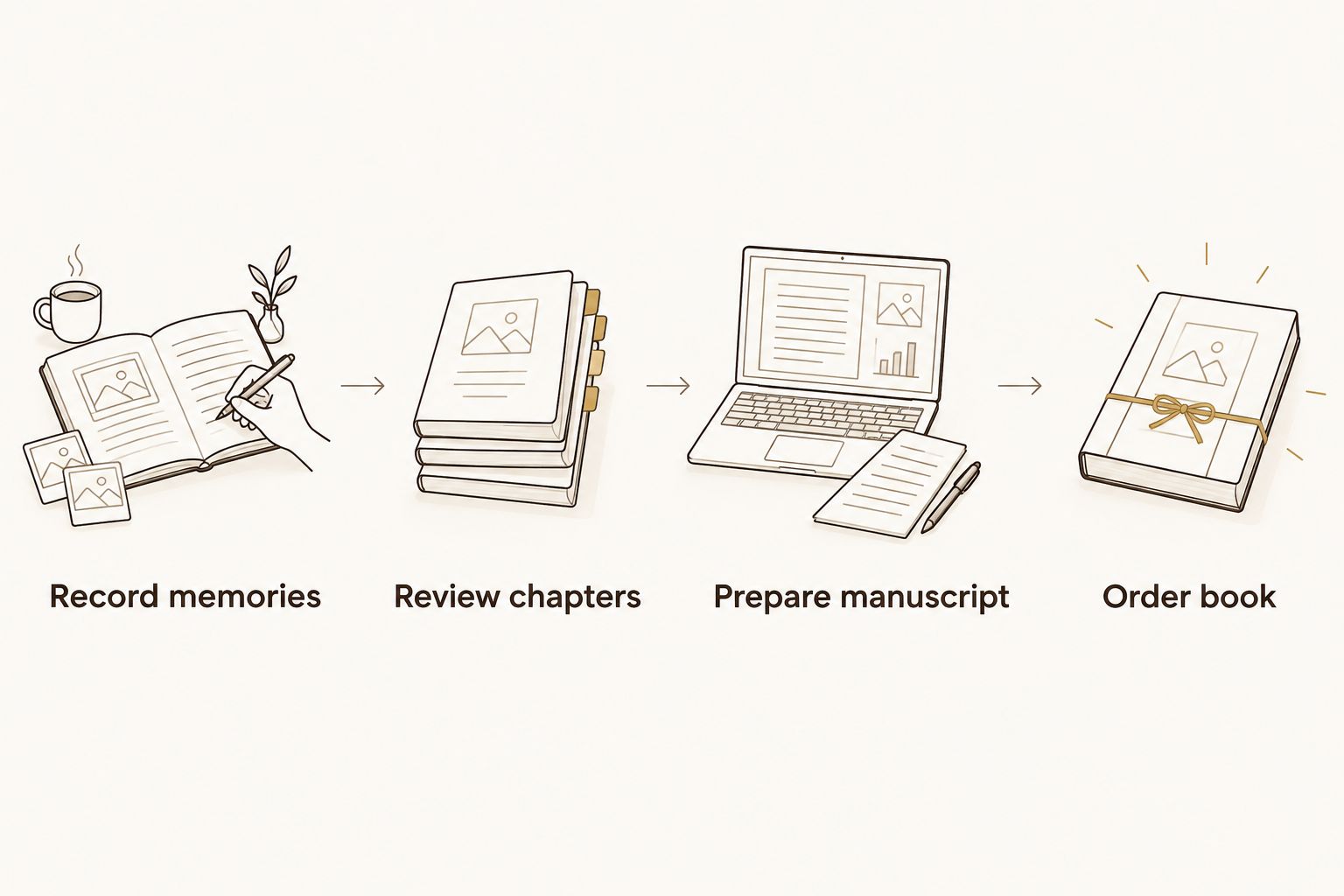
Keep the sequence clear even if you move back and forth between stages. Recording, reviewing, preparing, and ordering each answer a different question about the book.
Record memories
Speak about an event you can picture: where you were, who was present, what happened, and what you understood at the time. You do not need to make the first telling sound like finished prose.
When you reach an uncertain detail, mark the question and continue. That preserves the thread of the story without turning every recording session into a search for documents.
Review chapters
Read the chapter as someone who was not there. Explain relationships, distinguish people with similar names, and check whether the order of events makes sense.
Keep your voice recognizable. Editing should help your family understand you, not replace familiar expressions with language you would never use.
Prepare manuscript
Read the chapters together rather than approving each only in isolation. Look for repeated introductions, conflicting details, and passages that assume the reader already knows something explained much later.
Decide what belongs in this edition. A meaningful family keepsake does not need to contain every event you can remember, but it should represent the story you intend to share.
Order book
Move to ordering after you approve the intended manuscript. Check the available book choices and current production and delivery information before committing to a date.
Ordering is separate from starting your memoir. Keep that distinction visible on your checklist so a writing goal does not quietly become an unconfirmed printing deadline.
Why memoir-writing time varies
The work depends on the story you choose to preserve and the decisions needed to make it readable. Use these factors to inspect your plan rather than borrowing an unsupported completion estimate.
- Chapter scope. For a twelve-chapter interview structure, define what each chapter needs to communicate. A clear stopping point helps you decide when a section is ready for review.
- How you express yourself aloud. Voice-guided writing starts with spoken memories. Check whether you prefer telling a complete story or returning to it in smaller pieces, then plan recording sessions around that preference.
- Details that need clarification. Names, relationships, places, and uncertain sequences need deliberate attention. Keep unresolved questions together so you can address them without repeatedly searching the manuscript.
- Your approval standard. Decide what makes a chapter finished: understandable events, checked details, and wording you are comfortable sharing. Without a stopping rule, you have no clear approval point.
- The physical-book stage. A hardcover or softcover keepsake is a separate output from the manuscript. Confirm its current ordering requirements and timeline rather than assigning it the same deadline as writing.
Do not assume a particular cover choice means faster delivery. Choose the format you want, then check the information relevant to that order.
Where a voice-guided memoir app fits
Myvellum is best for people who want voice-guided memoir writing that leads to a printed family keepsake. Its twelve structured interview chapters provide a defined framework for telling your own life story.
The benefit is a clear structure connecting spoken memories with a personalized book. The limitation is equally important: a chapter framework does not decide which recollections are accurate, which private details belong in print, or when you feel ready to approve them.
Use the app to support the work, not to set an arbitrary finish date. Your family will read your account of your life, so your judgment remains central to the finished manuscript.
Begin your family memoir
Start with your memories, then make a separate decision about ordering your printed keepsake.
Can I finish recording before I finish editing?
Yes: recorded memories and an approved manuscript are separate milestones. You can capture stories first and review them afterward, but unfinished review still belongs in your overall writing plan.
Leave a clear note whenever a recording contains an unresolved detail. Otherwise, a passage that felt understandable while speaking can look finished when it still needs explanation.
Does finishing the interviews mean my book is ready?
No: completing twelve interview chapters does not replace manuscript approval. Read the text you intend to print, resolve the questions you have marked, and decide whether the chapters work together.
Use 3 checkpoints before ordering: factual details, reader understanding, and your comfort with sharing. These are review recommendations, not a required app workflow.
How should I plan around a family occasion in 2026?
Treat the occasion as a book-received deadline, not a writing deadline. Check current production and delivery information, then set an earlier manuscript-approval target that fits your remaining work.
If the schedule does not fit, preserve the stories first rather than approving text you have not reviewed. You can make a deliberate printing decision after the manuscript is ready.
FAQ
How long does memoir writing take with an app?
Estimate memoir-writing time from your own recording and review pace. Complete a representative chapter, assess the remaining work, and keep book production and delivery separate from manuscript preparation.
Can I write my memoir just by talking?
Voice-guided memoir writing lets you begin by speaking your memories. You still need to review the resulting text for meaning, names, context, and what you want your family to read.
How many interview chapters does Myvellum use?
Myvellum guides you through twelve structured interview chapters. That structure defines the interview framework, not a guaranteed completion time.
Should I edit every chapter before recording the next one?
You can choose when to review, but include review in your overall plan. Keep unresolved questions visible so recording progress does not hide unfinished manuscript work.
Is starting a free memoir the same as ordering a book?
Starting a free memoir and ordering a printed book are separate decisions. Begin capturing your memories first, then review your manuscript and the current ordering information before choosing a physical keepsake.
Does finishing my manuscript mean my printed book is ready?
Finishing your manuscript means the writing is approved, not that the physical book is ready. Book production and delivery have their own timeline, which you should confirm before setting a received-by date.
What should I check before printing my family memoir?
Check factual details, reader understanding, and your comfort with sharing the manuscript. Read the chapters together so repeated explanations and inconsistent details are easier to identify.
One last thing
Before approving your manuscript, look for a person your family will recognize by name but not by story. Add the ordinary detail that makes that person real: a familiar saying, a habit, or what you remember doing together.
Finish when the book says what you want your family to understand, not when you have exhausted every memory. Make that your final 2026 approval question before you move from writing to ordering.


