

A memoir has no required chapter count: use enough chapters to give each meaningful period, relationship, or turning point a clear place in your story. The right count depends on what you want your family to understand, not on a publishing quota. For a family memoir you begin in 2026, choose a workable outline first and adjust it as your memories take shape.
- How many chapters in a memoir book depends on its scope, not a required publishing standard.
- Myvellum offers twelve structured interview chapters for readers creating a personalized family memoir book.
- Choose chronological chapters for a clear timeline; use thematic chapters when relationships or recurring experiences connect your memories.
- Recording your memories and ordering a printed keepsake are separate steps. Finish the story before deciding it is print-ready.
How many chapters are in a typical memoir book?
There is no single chapter count that makes a memoir complete. A chapter earns its place when it gives your reader a distinct experience, explains a change, or develops something important about your life.
Start with the memories you want to preserve, then find the divisions between them. If you are speaking rather than typing, this guide to turning phone voice recordings into memoir chapters addresses that transition.
Use this process to decide your chapter count:
- Define the scope. Decide whether your book covers your whole life or a particular experience.
- Name the turning points. List the changes, relationships, places, and decisions that matter to that scope.
- Group connected memories. Keep scenes together when they develop the same subject or change.
- Test the boundaries. Start a new chapter when the reader needs a fresh setting, question, or direction.
- Revise after drafting. Combine thin chapters and divide chapters carrying unrelated stories.
Treat the outline as a set of containers, not a promise that every container must hold the same amount. Your finished chapter count should describe the story you actually tell.
Why this matters
Choosing a count too early gives you the wrong task: filling slots rather than preserving memories. You can end up stretching a small event into a chapter while squeezing an important relationship into a few paragraphs.
Your family needs context more than symmetry. Explain who someone was, what a place meant to you, and why a decision mattered. A chapter that answers those questions belongs in the book even if it is shorter than its neighbors.
For your 2026 memoir project, define success as a readable account your family can understand without you sitting beside them. A complete family memoir explains what matters; it does not document every year equally.
Choose a structure before choosing a chapter count
Chronological, thematic, and hybrid outlines organize the same memories differently. None supplies a universal chapter total. Choose the structure that makes your story easiest to follow, then let that structure guide the divisions.
| Structure | Best for | Main advantage | Main limitation |
|---|---|---|---|
| Chronological | Readers telling a life story through successive periods | Makes changes in age, place, and circumstance easy to follow | Can give routine periods more space than they need |
| Thematic | Readers organizing memories around relationships, work, identity, or belonging | Brings connected experiences together across time | Requires clear time cues when the story moves between periods |
| Hybrid | Readers who want a timeline with focused chapters on recurring subjects | Preserves a broad sequence while making room for important themes | Needs deliberate transitions to avoid repetition |
Chronological chapters: best for a clear life timeline
A chronological outline follows your experiences in sequence. You might move from your childhood home to leaving home, then into the relationships and responsibilities that shaped adulthood.
Its strength is orientation: your family can follow what happened next. Its limitation is that a calendar does not automatically create a story. Skip or summarize uneventful stretches rather than giving every period equal space.
Thematic chapters: best for connected memories across time
A thematic outline groups experiences by subject. A chapter about belonging might include memories from school, a move, and a later community rather than keeping those events far apart.
This approach gives a recurring subject room to develop. The trade-off is that your reader needs reminders about when events happened. Use place names, life stages, or clear transitions instead of expecting relatives to reconstruct the timeline.
Hybrid chapters: best for a timeline with focused detours
A hybrid outline follows a broad life sequence but pauses for subjects that deserve their own treatment. You might tell your early years chronologically, then devote a focused chapter to a relationship that continued across several periods.
The flexibility is useful, but repetition needs attention. If an event appears in more than one chapter, give each appearance a different purpose or keep the fuller account in one place.
Myvellum: 12 structured interview chapters
Myvellum is best for people who want voice-guided memoir writing organized into twelve structured interview chapters. At Myvellum, the memoir-writing app and print service supports creating a personalized hardcover or softcover keepsake of your life story.
The twelve-chapter structure gives you a defined starting framework. It does not establish twelve as the standard for every memoir, and it does not mean every part of your life deserves equal space.
The advantage is a guided route into recording your own memories. The limitation is that a structured interview framework is not the same as a completely open outline: decide whether that approach matches how you want to tell your story.
For a 2026 project, keep two stages distinct: starting your free memoir and ordering a printed book. Beginning the memoir is the recording and storytelling step; ordering the keepsake is a separate decision about the book you want your family to hold.
Visit myvellum.vercel.app to begin with your memories, not with pressure to order a finished book. Review the current details before deciding on a printed edition.
Why memoir chapter counts vary
Chapter count changes with the story's boundaries and the work each chapter needs to do. These factors help you decide whether a chapter belongs, needs dividing, or should join another section:
- Scope. A book about your whole life needs different divisions from a memoir centered on one defining experience.
- Turning points. A move, loss, decision, or new responsibility can create a natural break when it changes the story's direction.
- Recurring relationships. Memories about the same person can belong together or appear across the timeline, depending on your structure.
- Reader context. Family members who never knew a place or relative need explanation that familiar readers might not require.
- Scene development. A detailed experience with a clear change can support a chapter; a brief recollection can work within a larger one.
- Repetition. Separate recordings sometimes revisit the same event. Consolidating them can reduce the chapter count without losing the memory.
Do not use a chapter total as a substitute for these decisions. A chapter that repeats another chapter is not more valuable because it helps you reach a target.
How do you know where a memoir chapter should end?
End a chapter when its central experience reaches a meaningful pause or change. That might be a decision, a departure, a realization, or the moment you understood an event differently.
You do not need a dramatic cliffhanger. A family memoir can close a chapter quietly: the household changes, a friendship deepens, or your understanding of a parent shifts. The ending needs to feel intentional, not theatrical.
Use the following sequence while reviewing your draft:
- Name the purpose. Write a plain sentence explaining what this chapter gives your family.
- Find the change. Identify what is different between the opening and closing scenes.
- Check the boundary. Ask whether the next memory continues that change or begins another subject.
- Read the transition. Make sure the next chapter gives enough context to follow the shift.
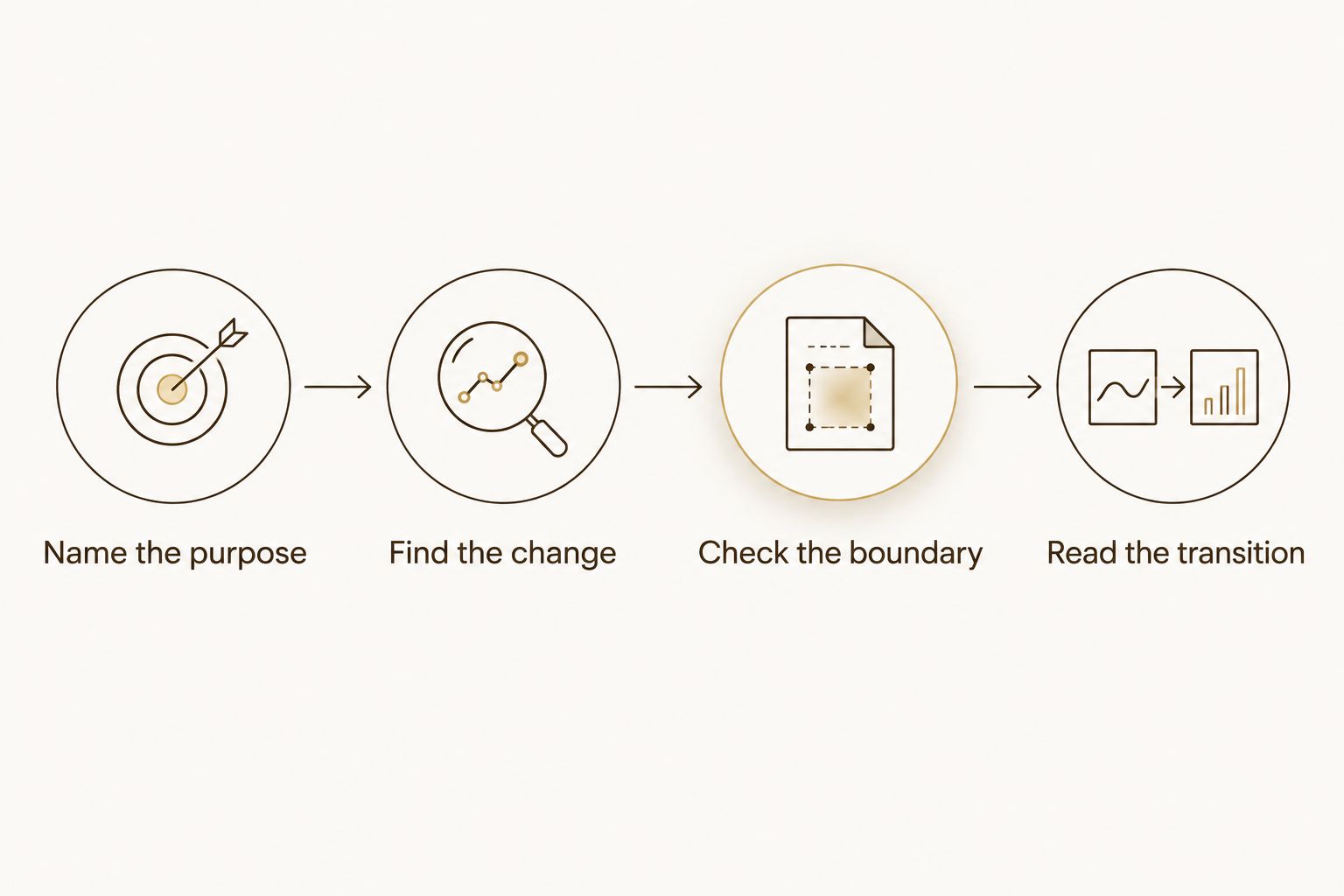
Apply this review to your 2026 draft after you have material to assess. Trying to perfect every boundary before recording can interrupt the more important work of getting the memory down.
Should memoir chapters be the same length?
Memoir chapters do not need equal lengths. Give each chapter enough space to establish the experience, develop its meaning, and reach an intentional stopping point.
A short chapter can preserve a sharply remembered encounter. A longer chapter can trace a complicated relationship. The problem is not the difference in length; it is leaving a reader without enough context or repeating material after the point is clear.
Review each chapter for three elements:
- Orientation: Who is involved, and where are you in your life?
- Experience: What happened, including the details you remember?
- Meaning: Why does this memory belong in the book?
These are editing checks, not mandatory subheadings. Your voice should still sound like you, especially when the book is intended for people who know how you speak.
Can a short family memoir still feel complete?
A short family memoir can feel complete when its scope is clear and its important questions are answered. It does not have to cover your entire life to become a meaningful keepsake.
Tell your reader what you are preserving. A book about building a home, changing countries, or finding your vocation can stand on its own without becoming a full autobiography.
If your 2026 goal is to finish a first memoir, select a scope you can explain in a sentence. You can preserve other memories later without forcing them into this book.
Check the chapter plan before ordering a printed book
A finished recording is source material; a print-ready memoir is an edited reading experience. Before ordering a keepsake, read the chapters in sequence rather than assessing each interview or memory separately.
Check names and relationships where they first appear. Explain family nicknames. Review remembered dates against records when you have them, and distinguish uncertain recollections from facts you can confirm.
Then inspect the chapter plan itself. Does the opening tell your family what kind of story they are entering? Does each chapter add something? Does the ending leave them with an understanding of what these experiences mean to you?
Hardcover and softcover describe the physical format, not the completeness of the story. Resolve the narrative decisions before making the separate printing decision.
FAQ
How many chapters should I put in my memoir book?
Use the number of chapters your story needs; memoirs have no required chapter count. Give each chapter a distinct purpose, and revise the total after drafting rather than filling a preset quota.
Does Myvellum use a set number of memoir chapters?
Myvellum guides you through twelve structured interview chapters for a personalized family memoir. That is its interview framework, not a universal requirement for memoir books.
Can I write a memoir about just part of my life?
Yes, your memoir can focus on a particular period, relationship, or experience. State that scope clearly so your family understands what the book includes and why.
Should I start a new chapter for every year of my life?
No, you do not need a new chapter for every year. Divide your story where the experience, setting, central relationship, or direction changes meaningfully.
Can I combine several memories into one chapter?
Yes, combine memories when they develop the same subject or turning point. Add clear transitions if those memories come from different periods.
Do I have to order a printed book when I start my memoir?
Starting your memoir and ordering a printed book are separate steps. Capture and review your story first, then check the current ordering details when you are ready to create a keepsake.
One last thing
Before finalizing the contents page, read only your chapter titles aloud. Do they reveal a journey, or do they merely label stretches of time?
Give each chapter a title that helps your family anticipate its meaning. You do not need clever wording. A specific place, relationship, or decision can make a more useful signpost than a vague label such as early years.


