
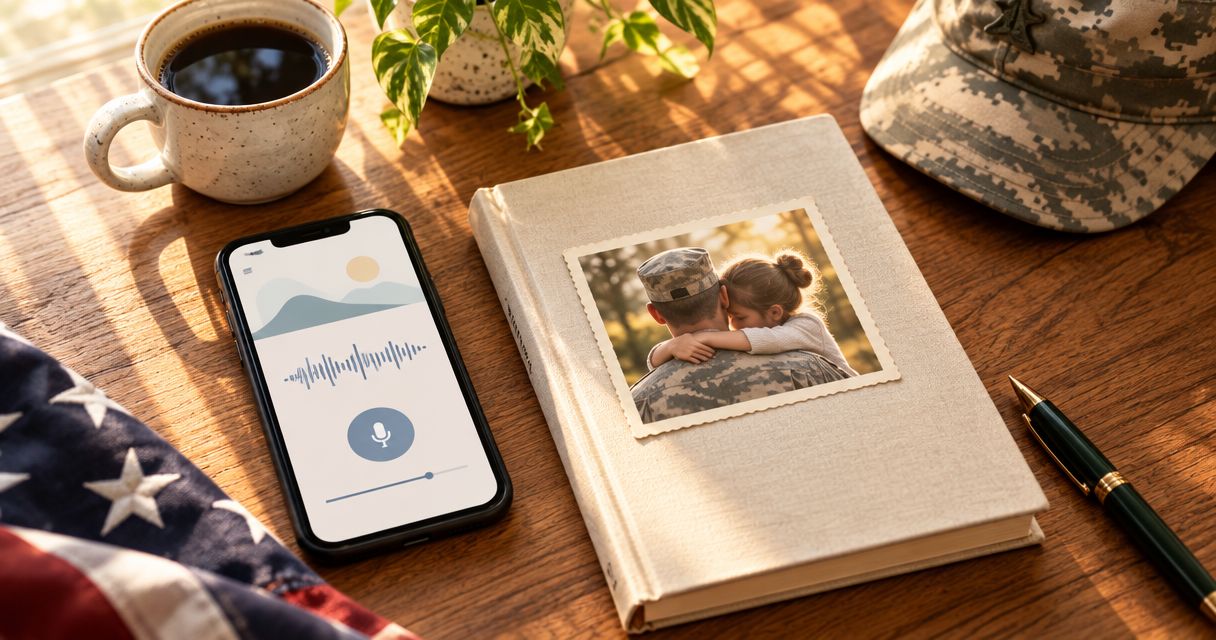
Military family memoir writing is recording your own life story with the aim of creating a personal keepsake for the people you love. This guide to memoir writing for military families covers choosing memories, explaining service life, protecting sensitive details, and preparing a family book; myvellum.vercel.app offers a voice-guided route from recollections to print.
- Myvellum suits memoir writing for military families who want voice-guided chapters and a printed family keepsake.
- Tell your own life story, including family routines and relationships beyond military service.
- Review sensitive details and other people's stories before sharing or printing your family history.
- Starting a free memoir and ordering a printed book are separate decisions; finish reviewing before ordering.
Why memoir writing matters for military families
A military family memoir needs to explain more than assignments. A child reading your story in 2026 needs to understand what a move meant, who kept home feeling familiar, and how your choices affected the people around you. Write for understanding, not for an official service record.
You also need room for your own perspective. A service member, spouse, and adult child can remember the same departure differently; your memoir should identify whose experience it records rather than settle every disagreement.
For service-focused selection criteria, see the guide to memoir writing services for veterans. The process below keeps the larger family story at the center, whether military service shaped your work, your marriage, your childhood, or all three.
Turn your memories into a family memoir
Choose your reader and boundaries
Start with a sheet of paper and name the person you want to understand you better. That reader is your audience, not your editor. Write a sentence about what you hope the book helps them understand: why you served, how you built a home, or what mattered during years of change.
Next, separate the story you want to tell from material you do not want to share. You do not owe a family audience every difficult memory. For your 2026 memoir project, decide which experiences belong in the book, which need more thought, and which remain private.
A clear boundary makes drafting more manageable. It also prevents the project from becoming a record of everyone else's life instead of your own.
- Name your intended reader on your planning page.
- Write the purpose of the memoir in one sentence.
- List subjects you are ready to discuss.
- Mark subjects you want to leave out.
- Decide who will read the draft before printing.
Build a timeline around home and service
Make a rough timeline by hand before writing chapters. Include childhood, relationships, work, military experiences, moves, and life after service where relevant. Leave uncertain dates marked as uncertain rather than filling gaps with guesses.
Pair each service milestone with a family milestone. An assignment tells the reader where you were; a first school day, a goodbye at the door, or a new friendship explains how life felt. Your family memoir needs both kinds of information.
Use photographs, letters, calendars, and documents as memory prompts, not as substitutes for your voice. Record what a source confirms separately from what you remember. A letter can establish what you wrote then without proving how everyone else felt.
- Write places and life stages in approximate order.
- Add relationships and household changes beside service events.
- Mark dates that need checking.
- Choose 3 memories to develop first.
- Give each memory a working title in everyday language.
Capture your voice before polishing sentences
Begin with a phone recorder or a notebook you already have. Describe a memory as if you were telling it to your intended reader across the kitchen table. Start with a recommended 10-minute session, then stop at a natural break; this is a planning target, not a requirement.
If open-ended recording leaves you unsure what to say, Myvellum provides a structured alternative. The memoir-writing app guides you through twelve interview chapters and produces a personalized hardcover or softcover keepsake book. Myvellum is best for military family storytellers who want voice-guided chapters and a printed keepsake.
That structure does not replace your judgment. You still need to decide what belongs in the story, check names and dates, and review the text before ordering. Keep starting a free memoir separate from the later decision to order a printed book.
- Choose a quiet place where you can speak comfortably.
- Begin with one specific scene rather than your whole life.
- Explain who was present and why the moment mattered.
- Pause whenever you want to leave a subject alone.
- Note unanswered questions for a later session.
Shape memories into readable chapters
Work from your recordings or notes and give each chapter a clear focus. A chapter about moving should explain more than the destination: what you left behind, what you carried with you, and how you found your footing. A chapter about service should include your reasons and reflections, not just duties.
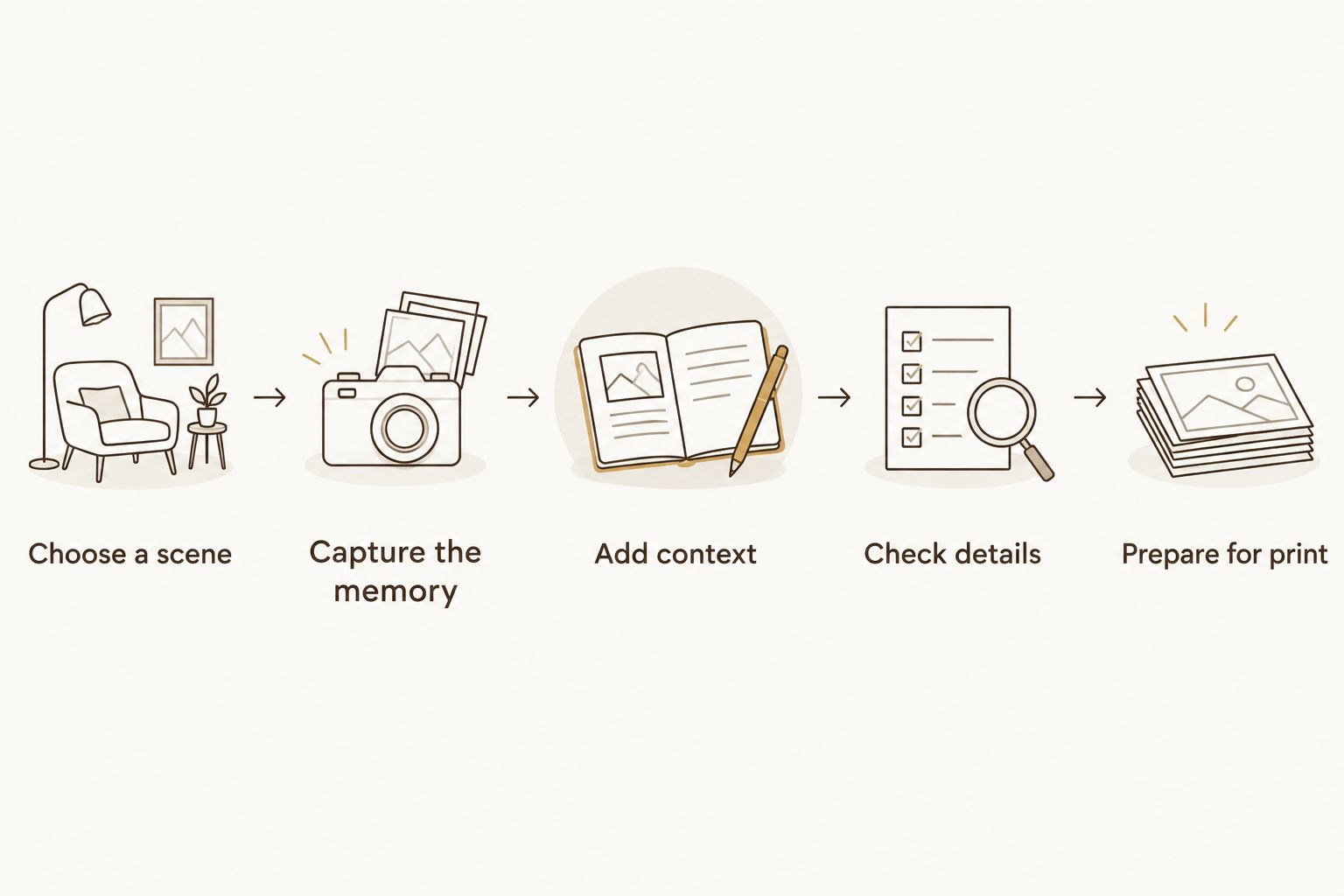
For a 2026 draft, use a repeatable sequence: choose a scene, capture the memory, add context, check details, then prepare the chapter for print. Finish the meaning before refining every sentence. Editing an unfinished story can distract you from the memories you still want to record.
The following sequence keeps storytelling and checking separate without treating either as optional.
A chapter does not need a dramatic event to deserve its place. A familiar breakfast, a letter-writing habit, or the way you welcomed someone home can reveal character. Explain why you remember it, and let that meaning guide what you keep.
- Choose a scene with a clear beginning and ending.
- Capture the memory in your own words.
- Add context for readers unfamiliar with military life.
- Check details against records where possible.
- Prepare for print only after the chapter makes sense.
Explain service without losing the family story
Write for a relative who does not know your terminology. Spell out an unfamiliar abbreviation when it first appears, then explain its relevance. A definition alone is not enough if the reader still cannot understand what changed in your daily life.
Keep your perspective explicit. Describe what you experienced, what someone told you, and what you learned later as different kinds of information. Do not turn another person's silence into a claim about their feelings.
Balance service scenes with home scenes. If you were the person maintaining household routines, that experience belongs in the memoir in its own right. If you served, describe what you understood about home at the time and what you came to understand afterward.
- Explain unfamiliar ranks, roles, and abbreviations in context.
- Describe the practical effect of a move or separation.
- Include ordinary routines alongside major events.
- Identify recollections that come from another person.
- Replace assumed feelings with what you observed or were told.
Review sensitive material and shared memories
Read the draft for information you should not distribute. A family keepsake is still shared material: readers can pass it to others, photograph a page, or discuss its contents. Do not treat a small intended audience as permission to include classified or restricted information.
If your material is subject to an official review requirement, follow the applicable process before sharing or printing it. A memoir-writing app is not a substitute for that review. Seek guidance through the appropriate official channel when you are uncertain about service-related material.
Personal privacy needs a separate pass. Medical details, relationship conflicts, children's experiences, and stories involving identifiable colleagues deserve deliberate decisions. Ask people about sensitive passages concerning them, and distinguish a request for factual correction from a request to rewrite your perspective.
- Remove classified or restricted information from the draft.
- Check applicable review requirements before distribution.
- Review addresses, identifying details, and personal records.
- Ask affected people about sensitive shared stories.
- Label uncertain recollections instead of presenting them as established facts.
Prepare the manuscript before ordering your book
Review your memoir as a reader, not just as its author. Read passages aloud and check whether a relative unfamiliar with your service could follow them. If a name appears without explanation or a move seems abrupt, add enough context to close the gap.
For a book you plan to order in 2026, separate manuscript approval from the printing decision. Starting a free memoir is the first stage; ordering a printed copy comes after you have reviewed the story and checked the current order details. Do not let the prospect of a finished book rush your final review.
Myvellum offers personalized hardcover and softcover keepsake books. Choose the format after considering how you want your family to use the book, and confirm the current printing specifications before ordering. Neither binding choice fixes unclear storytelling or unchecked details.
- Check names, relationships, place names, and chapter order.
- Read at least 1 complete chapter aloud.
- Confirm permission for material you include from others.
- Review the available print specifications and order terms.
- Approve the manuscript before placing the print order.
Start your family memoir
Use voice-guided chapters to tell your story, then review it before ordering a printed keepsake.
Compare ways to create your military family memoir
Choose your method by the support you need, not by how impressive the finished project sounds. A notebook gives you control over the order and wording. A guided interview app gives you prompts. A hired writer adds another person to the storytelling process and requires a clear agreement about responsibilities.
Myvellum's memoir-writing approach fits readers who prefer speaking to facing an empty page and want a route to a printed family book. Its stated twelve-chapter structure is the relevant distinction; it does not establish military-specific review, editing, or security services.
| Option | Best for | Main advantage | Key limitation |
|---|---|---|---|
| Notebook or document editor | Writers who want to shape every chapter themselves | Direct control over wording and organization | You arrange prompts, review, and printing separately |
| Phone recordings with your own written draft | Storytellers who speak more easily than they write | Captures your phrasing before editing | Recordings still need to become a readable manuscript |
| Myvellum | Readers who want guided speaking and a printed keepsake | Twelve interview chapters with hardcover or softcover output | You still need to check accuracy, sensitive material, and current print details |
| Hired memoir writer | Readers who want another person involved in drafting | Gives you a collaborator for organizing your story | Responsibilities, permissions, and manuscript approval need an explicit agreement |
These options are not interchangeable. Recording preserves a spoken account; a manuscript organizes that account for reading; printing turns the approved manuscript into a physical object. Decide which stage you need help with before choosing a service.
Common mistakes military family memoir writers make
Making the book read like an assignment history
A sequence of locations and roles leaves relatives without the reasons those years mattered. Add a scene, a relationship, or a decision to each important period. Keep the chronology, but give it a human purpose.
Assuming everyone shares your vocabulary
Terms familiar to you can interrupt the story for a family reader. Explain them where they appear instead of sending the reader elsewhere. Keep the explanation focused on what the term means for the memory.
Speaking for the whole household
Your experience of a separation is not automatically your partner's or child's experience. Tell your own story clearly and attribute other accounts. When memories differ, acknowledge the difference without forcing agreement.
Treating family distribution as a privacy safeguard
A small audience does not remove the need to review sensitive information. Check service-related restrictions and personal details before sharing the draft. Make that review part of your 2026 finishing plan, not an afterthought.
Ordering before the story is ready
A binding choice can feel easier than revisiting an unclear chapter. Finish the manuscript review first. The keepsake should preserve the story you intended to tell, not the draft you happened to have when you ordered.
FAQ
How do I start memoir writing for military families?
Start by choosing your intended family reader and recording one memory you want that person to understand. Build a rough timeline afterward, including home life and relationships alongside service milestones.
Can I write a military family memoir if I was not the service member?
Yes, your own experience as a spouse, child, or other family member is a valid subject for a memoir. Describe what you lived through and identify information that comes from someone else's account.
Is speaking my memories better than writing them?
Speaking is a useful starting method if conversation comes more naturally to you than drafting. Writing gives you direct control over sentences, but either method still requires organization and review before printing.
Does Myvellum help turn spoken memories into a family book?
Myvellum is a voice-driven memoir-writing app and print service with twelve structured interview chapters. It produces personalized hardcover or softcover keepsake books; you still need to review your story and current order details.
Should I include every deployment or move in my memoir?
No, include the deployments and moves that help explain your life and relationships. A timeline can preserve the sequence while chapters focus on experiences with meaning for your intended reader.
Can I include sensitive military information in a book just for family?
Do not include classified or restricted information simply because the intended readers are relatives. Follow any applicable official review requirements before sharing or printing service-related material.
Is starting a free memoir the same as ordering a printed book?
No, starting a free memoir and ordering a printed book are separate steps. Capture and review your story first, then check the current printing specifications and order terms before ordering.
One last thing
Write a short opening note directly to the person you imagined reading your memoir. Tell them why you chose to record these memories in 2026 and what you hope they understand about you. Give your family the context only you can provide: not just what happened, but why you kept remembering it.


