

Yes, two people can co-write a memoir together by agreeing on whose story the book tells, how each voice appears, and who approves the finished manuscript. You can alternate personal accounts, write shared chapters, or keep your own life story at the center while another person helps you tell it. A shared writing project does not automatically mean a memoir app supports shared accounts or simultaneous editing.
- To co-write memoir together, choose the narrator structure before recording your family stories.
- Label individual memories clearly; reserve shared narration for experiences both writers approve.
- Myvellum guides individual memoirs through twelve interview chapters; confirm collaboration features before planning a joint workflow.
- Starting a free memoir and ordering a printed keepsake book are separate decisions.
Why this matters
Your family needs to know who remembers each scene. Without that distinction, a jointly written memoir can make one person's interpretation sound like everyone's settled account.
For your 2026 memoir project, choose the storytelling structure before choosing a workflow. Myvellum offers voice-guided memoir writing and printed keepsake books; a two-person project also needs an agreement about authorship, review, and permission.
The goal is not to make your memories identical. It is to make each person's contribution understandable. A family book can preserve affection, disagreement, and different points of view without turning every chapter into a debate.
Can two people co-write one memoir together?
Yes. Start by deciding whether you are writing two intertwined life stories or your own life story with someone else's help. Those are different projects, even when the finished book carries both people's contributions.
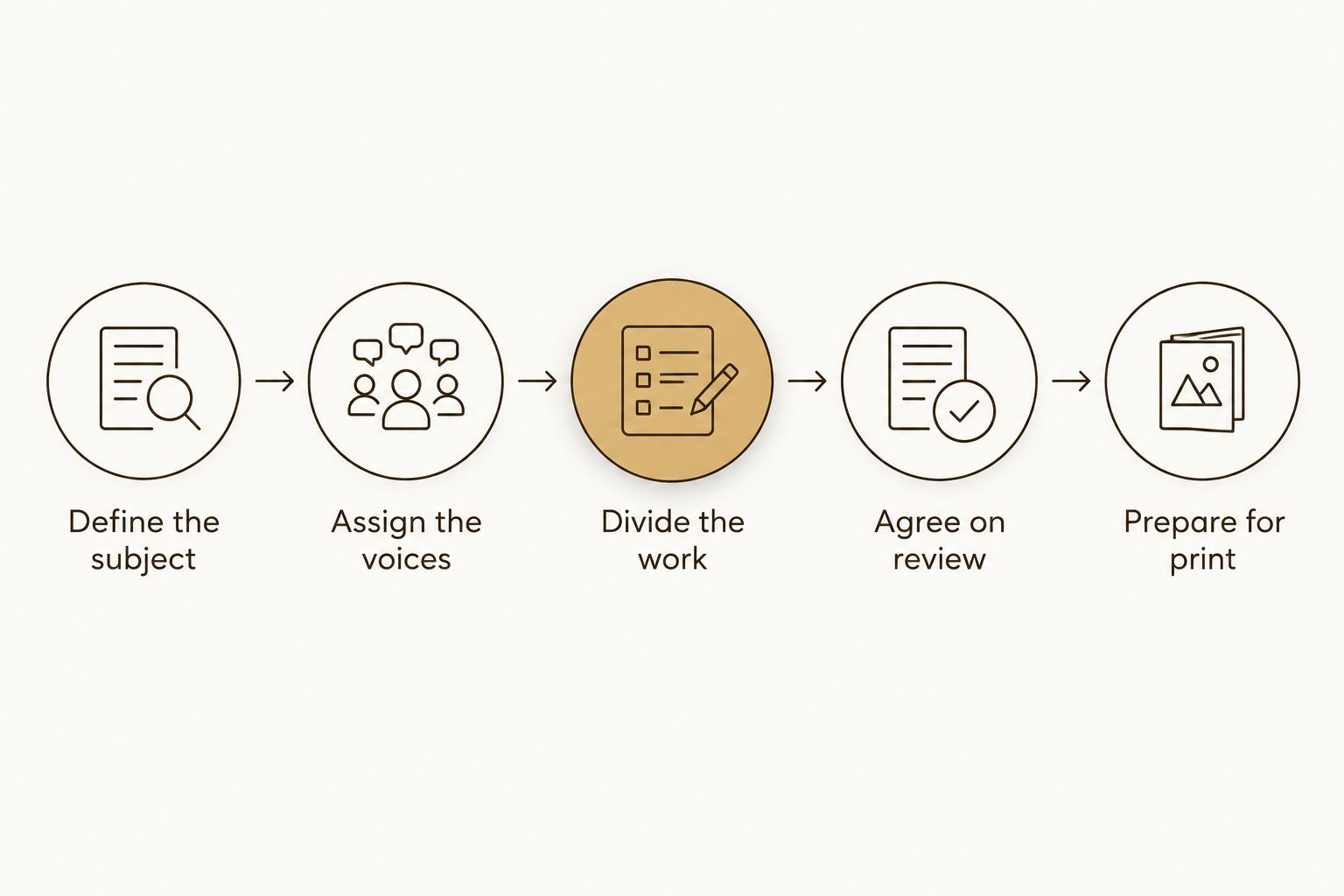
Use this sequence before you record a full set of interviews:
- Define the subject. Write a sentence explaining what the book preserves: your marriage, a shared childhood, a family business, or your own life.
- Assign the voices. Decide which passages use individual narration and which describe genuinely shared experiences.
- Divide the work. Name the person responsible for each draft, factual check, and final assembly.
- Agree on review. Give each writer approval over passages presented as their own words.
- Prepare for print. Review the complete manuscript together before placing a book order.
Test that agreement on 1 sample chapter before drafting the whole memoir. Choose an event you both remember, write or record separate accounts, and combine them using your proposed structure. You will see where attribution needs work without revising an entire book.
Which structure fits your shared memoir?
Choose a format based on what the reader needs to understand, not on making every contribution the same length. Equal authorship does not require equal word counts in every chapter.
| Structure | Best for | Main advantage | Main limitation |
|---|---|---|---|
| Alternating narrators | Two people telling connected life stories | Keeps each person's perspective distinct | Requires clear speaker labels and transitions |
| Shared narration | Experiences both writers remember and approve | Lets you describe joint decisions together | Can hide differences if you overuse “we” |
| Primary narrator with contributions | Your life story, supported by someone else's memories | Keeps your personal story at the center | Contributions need attribution so they do not replace your voice |
Alternating narrators: keep both voices visible
Best for: partners, siblings, or friends whose separate experiences form one story. Give each person a named section or chapter. Follow a consistent pattern so your reader does not have to infer who is speaking.
The advantage is room for different interpretations. The trade-off is repetition: both writers might describe the same arrival, argument, or celebration. Keep repeated scenes only when the second account adds something meaningful.
Shared narration: use “we” carefully
Best for: events and decisions you both experienced and approve describing together. Shared narration works for what you did as a pair. It becomes less precise when it claims that you felt or believed exactly the same thing.
Use individual attribution for private thoughts. You can describe making a move together, then explain separately what each person feared leaving behind. That preserves the shared event without inventing a shared inner life.
Primary narrator with contributions: protect your own story
Best for: recording your life while another person asks questions, checks details, or adds short recollections. You remain the main narrator; your collaborator helps bring the story into focus.
This structure gives your family a clear route through your experiences. Its limitation is the potential for the helper's phrasing to crowd out your own. Ask your collaborator to flag unclear passages rather than silently replace the way you speak.
Why co-writing decisions vary
Your relationship alone does not determine the right format. Two siblings can write separate accounts, while a married couple can choose a memoir centered on just one person's life.
Before starting your 2026 recordings, discuss these factors:
- The book's subject: A shared relationship needs a different structure from an individual life story with supporting recollections.
- Firsthand knowledge: Separate what you witnessed from what someone later told you.
- Comfort with disclosure: Agree on boundaries for private experiences before drafting sensitive chapters.
- Division of work: Distinguish storytelling from interviewing, editing, checking details, and assembling the manuscript.
- Review authority: Decide how you will handle disputed passages and who must approve personal material.
- The intended reader: Explain people, places, and family references that future readers will not recognize.
Write the decisions down in a short project note. You do not need to settle every sentence in advance, but you do need an agreed way to resolve questions when they appear.
How do you combine memories without losing your voice?
Record each person's account independently before combining the material. That gives both writers space to describe what they remember without constantly correcting or accommodating the other person.
Then organize the accounts around events or themes. Keep the speaker's name attached to each passage during drafting, even if you later change the chapter layout. Remove duplicated background information, not the details that make each perspective distinct.
Separate facts from remembered impressions
Check names, places, and dates against records you already have. Letters, journals, photographs, and documents can help you identify inconsistencies, but they do not explain every feeling or motive.
When a date remains uncertain, say so rather than choosing a precise date for appearance's sake. When a feeling belongs to one writer, attribute it to that writer. Your memoir becomes clearer when readers can distinguish a documented event from a personal interpretation.
Keep disagreements visible when they matter
You do not have to settle every difference. Present contrasting memories side by side when the difference helps your family understand the experience.
Avoid turning a disputed recollection into an accusation presented as established fact. If a passage affects another person's privacy or reputation, reconsider whether it belongs in the family edition at all. Being memorable is not the same as being necessary.
Edit for understanding, not sameness
Read the combined chapter aloud. Listen for unexplained names, abrupt changes of speaker, and language neither writer would naturally use.
Keep differences in vocabulary and emphasis when they help readers hear each person. A shared memoir needs a consistent structure, not identical voices. Your family should be able to recognize you in the finished pages.
Can you use a voice-guided memoir app together?
You can plan a shared memoir around spoken interviews, but verify the app's collaboration features before relying on them. Voice recording, coauthor access, shared editing, and combining separate projects are different capabilities.
Myvellum is best for individuals who want to turn spoken life stories into printed family memoirs. Its described process guides an individual through 12 structured interview chapters and produces a personalized hardcover or softcover keepsake book.
That structure gives an individual storyteller a defined path. The limitation for a joint project is that the supplied product description does not establish shared logins, multiple narrator profiles, simultaneous editing, or project merging. Do not plan your workflow around unconfirmed collaboration features.
For a 2026 project, ask these questions before recording extensively:
- Can separate speakers remain clearly identified in the manuscript?
- Can both writers review the same draft through a supported process?
- Can you correct a passage without losing its attribution?
- What must be complete before you order the printed book?
If your main goal is your own life story, another person can still help you prepare questions and review wording without becoming a second narrator. Keep that editorial relationship separate from assumptions about account access.
How do you move from recording to a printed family book?
Starting a free memoir and ordering a printed book are separate steps. Begin with your memories and the structure of your story; decide about the physical keepsake after you have reviewed the manuscript.
For your 2026 print review, read the book in the order your family will encounter it. A chapter that makes sense to its authors can still leave a grandchild wondering who someone was or why a particular move mattered.
Check the manuscript for:
- Speaker clarity: Every change of narrator is apparent.
- Family context: Relationships and unfamiliar references have explanations.
- Personal boundaries: Both writers have reviewed passages involving their private experiences.
- Consistent details: Names, place spellings, and repeated events agree where they should.
- A clear ending: The closing pages explain what you want your family to carry with them.
Myvellum offers hardcover and softcover keepsake books. Choose the format after the writing is ready, and check the current ordering details before committing. A binding choice cannot fix a manuscript that leaves readers unsure whose story they are reading.
FAQ
Can my spouse and I write one memoir together?
Yes, you and your spouse can write one memoir together using alternating voices, shared narration, or one primary narrator with contributions. Agree on the structure and review process before recording the full story.
Can two people co-write a memoir if they remember events differently?
Yes, two people can co-write a memoir while preserving different memories. Attribute each recollection clearly and check factual details against available records rather than forcing agreement.
Do both memoir writers need equal space in the book?
No, both writers do not need equal space in every chapter. Give each contribution the room it needs to explain the experience, and agree on the overall balance together.
Can someone help write my memoir without becoming a narrator?
Yes, someone can help by asking questions, organizing material, or checking a draft while you remain the narrator. Agree on how to acknowledge that contribution and who approves changes.
Does a voice-recording memoir app automatically support coauthors?
No, voice recording does not automatically include coauthor access or shared editing. Confirm the specific collaboration features before building a two-person workflow around an app.
Should we record our memories together or separately?
Start with separate accounts when you want each person's independent recollection. Review them together afterward to identify shared context, meaningful differences, and passages needing clarification.
Does starting a free memoir mean I have ordered a printed book?
No, starting a free memoir and ordering a printed book are separate steps. Review the completed manuscript and current ordering details before choosing a physical keepsake.
One last thing
Before you finalize your 2026 memoir, write a short note explaining who tells the story and how you assembled it. State whether chapters alternate voices, use shared narration, or include contributions to one person's account.
That note gives future family readers something valuable: a way to understand the voices behind the pages. Preserve the relationship between the storytellers, not just the events they remember.


